
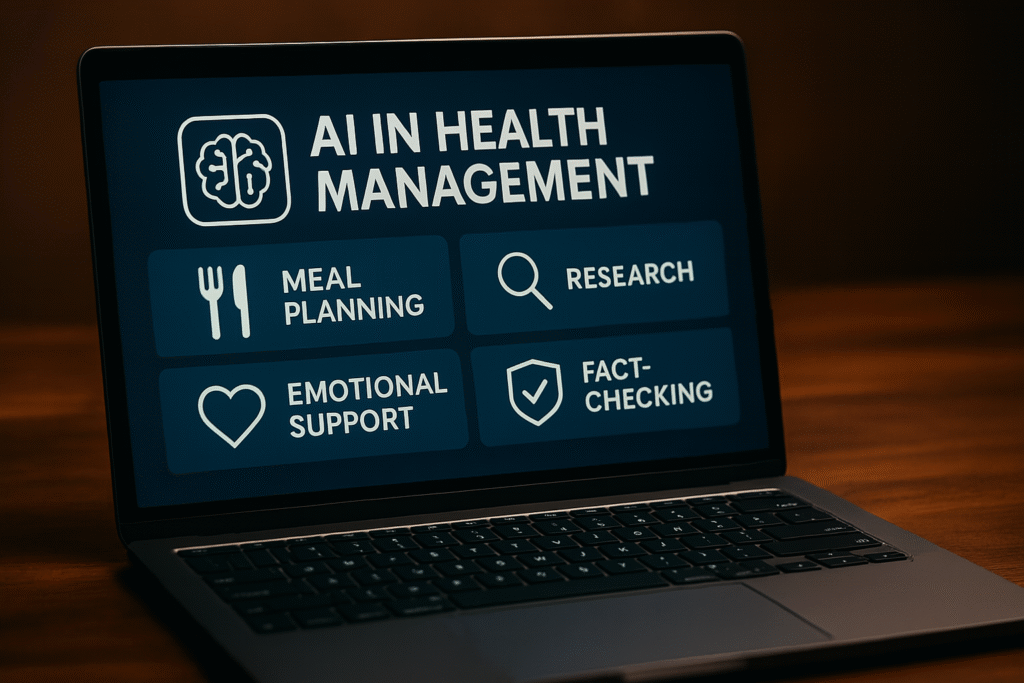
Artificial Intelligence (AI) isn’t just for tech enthusiasts anymore. According to a recent survey, approximately 35% of Americans are now using AI to enhance their health management routines. From meal planning and medical research to emotional support and verifying health information, AI is rapidly becoming a trusted partner in daily wellness.
AI for Meal Planning: Nutrition Simplified
One of the leading reasons people are embracing AI is to simplify meal planning. AI-powered apps effortlessly personalize meal suggestions based on dietary preferences, nutritional goals, and even allergies.
Personalized Diet Plans: AI considers your specific nutritional needs and generates meals tailored just for you.
Smart Grocery Lists: AI tools automatically create grocery lists, reducing waste and saving time.
In addition, users appreciate how these AI solutions provide a clear pathway to healthier eating without extensive nutritional knowledge.
Medical Research at Your Fingertips
AI has also revolutionized how Americans access medical information. Rather than wading through pages of conflicting advice, users now rely on AI-driven platforms for fast, accurate insights.
Rapid Fact-checking: AI quickly verifies the credibility of health information, cutting through misinformation.
Customized Health Insights: AI analyzes symptoms and offers reliable suggestions on when to seek medical care.
Consequently, Americans find AI-driven research tools trustworthy and time-saving, giving them greater control over their healthcare choices.
AI as Emotional Support: The Rise of Virtual Companions
AI’s capacity to support emotional health is one of its most intriguing and rapidly growing applications. Virtual companions powered by AI offer users immediate emotional support and guidance, available 24/7.
Instant Support: AI companions provide instant responses, beneficial during emotional crises.
Judgment-Free Zone: Users often prefer AI interactions, free from the fear of judgment or embarrassment.
Moreover, these virtual AI companions promote emotional resilience, guiding users toward healthier coping mechanisms over time.
Fact-Checking Health Information: Reliability Matters
In a world flooded with health-related content, discerning fact from fiction can be challenging. AI-powered fact-checkers are increasingly used to ensure the accuracy of health information.
Verified Information: AI cross-references multiple credible sources to deliver reliable information.
Reducing Anxiety: AI helps reduce health-related anxiety by providing clear, accurate answers promptly.
As a result, users feel more confident in their health decisions, reducing stress and promoting informed healthcare behaviors.
Why Trust in AI is Growing
Initially skeptical, a growing number of Americans now trust AI due to consistent positive experiences and visible improvements in their daily lives. AI technology has demonstrated tangible benefits:
Convenience: AI streamlines tasks, reducing mental and physical effort.
Accuracy: Advanced algorithms offer precise, tailored recommendations.
Accessibility: AI makes expert-level advice accessible to everyone, anytime.
Therefore, as AI technology continues to advance, trust levels among Americans are projected to increase further.
The Future of AI in Health Management
Looking ahead, AI adoption in health management is poised for exponential growth. Emerging trends suggest deeper integrations in healthcare, including:
Predictive health analytics for disease prevention.
Integration with wearable health devices for real-time monitoring.
Enhanced AI mental health support systems, providing proactive interventions.
In essence, AI’s potential to personalize, predict, and proactively manage health will continue to drive adoption among a broader audience.
Summary
AI adoption for health management among Americans stands at an impressive 35%, driven by its effectiveness in meal planning, medical research, emotional support, and verifying health information. As these technologies improve, AI will increasingly become an essential component of proactive health management.