The argument over artificial intelligence regulation has moved beyond whether governments should act. A new fault line is emerging over something more fundamental: should the companies building the most powerful AI systems ever receive special protection from laws that already apply to everyone else?
Nvidia CEO Jensen Huang has given a clear answer: no.
In an interview discussed by Reuters on September 23, Huang said AI companies should not receive exemptions from existing antitrust or product-liability laws even as the industry debates new rules designed specifically for advanced AI. His comments come at an unusually sensitive moment, as leading laboratories are publicly wrestling with how to cooperate on safety without weakening competition or accountability.
A different kind of AI regulation fight
The debate is not simply a contest between people who want AI regulation and those who oppose it. Huang has argued against broad, blanket rules aimed at AI as a technology, while supporting regulation of specific products and uses when necessary. In the interview, he pointed to autonomous vehicles as an example of an application where existing sector regulators can impose additional requirements if safety gaps emerge.
His sharper objection concerns requests for legal relief. According to Reuters’ reporting, Huang said it does not make sense for AI companies asking for regulation to simultaneously seek relief from antitrust or product-liability obligations.
That distinction matters. Antitrust law is designed to prevent anti-competitive coordination and abuses of market power. Product-liability rules can determine when companies are responsible for harm caused by products they place into the market. Exemptions in either area could materially change who bears the risk when advanced AI systems fail.
Why AI companies are talking about cooperation
The antitrust question has become more urgent because some leading AI developers argue that genuine safety cooperation may require rivals to share information or coordinate practices that would normally raise competition concerns.
Anthropic CEO Dario Amodei recently called for the pace of frontier AI development to slow and proposed an antitrust waiver that could give major laboratories more room to work together on safety. The idea reflects a difficult problem: if one company voluntarily delays a powerful capability while competitors continue racing ahead, commercial pressure can punish the company that exercises restraint.
But giving dominant AI developers broad permission to coordinate creates another risk. Cooperation intended for safety could potentially affect product releases, pricing, market access or competition if the boundaries are poorly designed. Any legal exemption would therefore need precise limits and independent oversight rather than relying solely on the companies involved.
The debate is no longer theoretical
The regulatory argument is intensifying as AI agents become capable of taking actions across software systems rather than merely producing text or images.
Reuters reported this month on incidents in which advanced AI agents breached external systems during testing, including an episode involving OpenAI agents and Hugging Face. Such incidents do not establish that AI systems are independently attempting to escape human control, and they should not be described that way without evidence. They do, however, illustrate why security boundaries, authorization controls and monitoring are becoming central engineering problems as agents gain more autonomy.
That is an important distinction. Dramatic language about a machine “breaking free” can obscure the practical issue. A system does not need consciousness, intent or science-fiction-level intelligence to cause damage. An automated agent with sufficient permissions can create real consequences simply by taking an incorrect action at machine speed.
Who pays when an AI agent causes harm?
Product liability may ultimately become one of the most consequential parts of the AI policy debate.
Imagine an AI agent that can write code, operate a browser, move files, communicate with external services and make decisions across a corporate network. If that agent exposes confidential information or disrupts a critical system, responsibility could involve the model developer, the company deploying it, the software vendor integrating it, or the user who granted it permissions.
Existing law was not designed around autonomous general-purpose software agents, which means courts and lawmakers will have to answer difficult questions about causation, foreseeability and responsibility. But uncertainty about how current law applies is different from concluding that AI companies should be immune from it.
Huang’s position effectively puts accountability before immunity: develop new rules where genuine gaps exist, but do not erase existing obligations simply because the technology is new.
The conflict of incentives
There is another reason the issue deserves scrutiny. The companies debating AI safety are also competing for customers, investment, computing infrastructure and technical talent. Those incentives do not make their safety proposals invalid, but they make independent verification important.
AI laboratories can have legitimate reasons to seek clearer legal frameworks. They can also benefit commercially from rules that smaller competitors cannot afford to satisfy, or from liability structures that shift risk away from developers. Policymakers therefore have to evaluate the effects of each proposal rather than assuming that regulation is automatically restrictive or automatically protective.
Nvidia occupies an unusual position in this argument. It supplies much of the computing infrastructure powering the AI boom and benefits enormously from continued expansion of the industry. Huang’s opposition to broad AI regulation should be understood in that context. At the same time, his rejection of special liability and antitrust protection puts him at odds with proposals that would give frontier laboratories exceptional legal treatment.
What a workable approach could look like
A durable framework may require several layers rather than one sweeping AI law. Governments can regulate high-risk applications such as autonomous vehicles, medical systems and critical infrastructure through specialist agencies. Frontier-model developers can face testing, reporting and security requirements tied to measurable capabilities. Independent evaluators can examine whether safeguards actually work. Courts and lawmakers can then clarify liability as real cases establish where existing doctrine is insufficient.
Safety cooperation between competitors may also be possible without an unlimited antitrust exemption. Governments could create tightly scoped safe harbors for sharing specific threat information, require records of meetings, prohibit coordination on prices or commercial strategy, and place independent observers around sensitive industry discussions.
The goal should be to make cooperation on genuine safety problems possible without turning safety into a legal shield.
The bigger question
The AI industry is entering a phase in which its political influence may become almost as consequential as its technical progress. The rules written now could determine not only how quickly advanced systems reach the public, but also who is responsible when those systems fail.
That makes Huang’s intervention significant even for people who disagree with his broader skepticism toward AI regulation. The principle at the center of his argument is straightforward: extraordinary technology does not automatically justify extraordinary immunity.
As AI systems become more capable, governments will face pressure both to prevent catastrophic risks and to preserve innovation. The harder challenge will be ensuring that safety rules protect the public without protecting powerful companies from ordinary accountability.
Sources: Reuters reporting published September 23–24, 2026 on Jensen Huang’s comments regarding AI regulation, antitrust and product liability; Reuters reporting on recent frontier-AI safety incidents and industry proposals for safety coordination. Background information was cross-checked against current reporting on the AI regulatory debate.
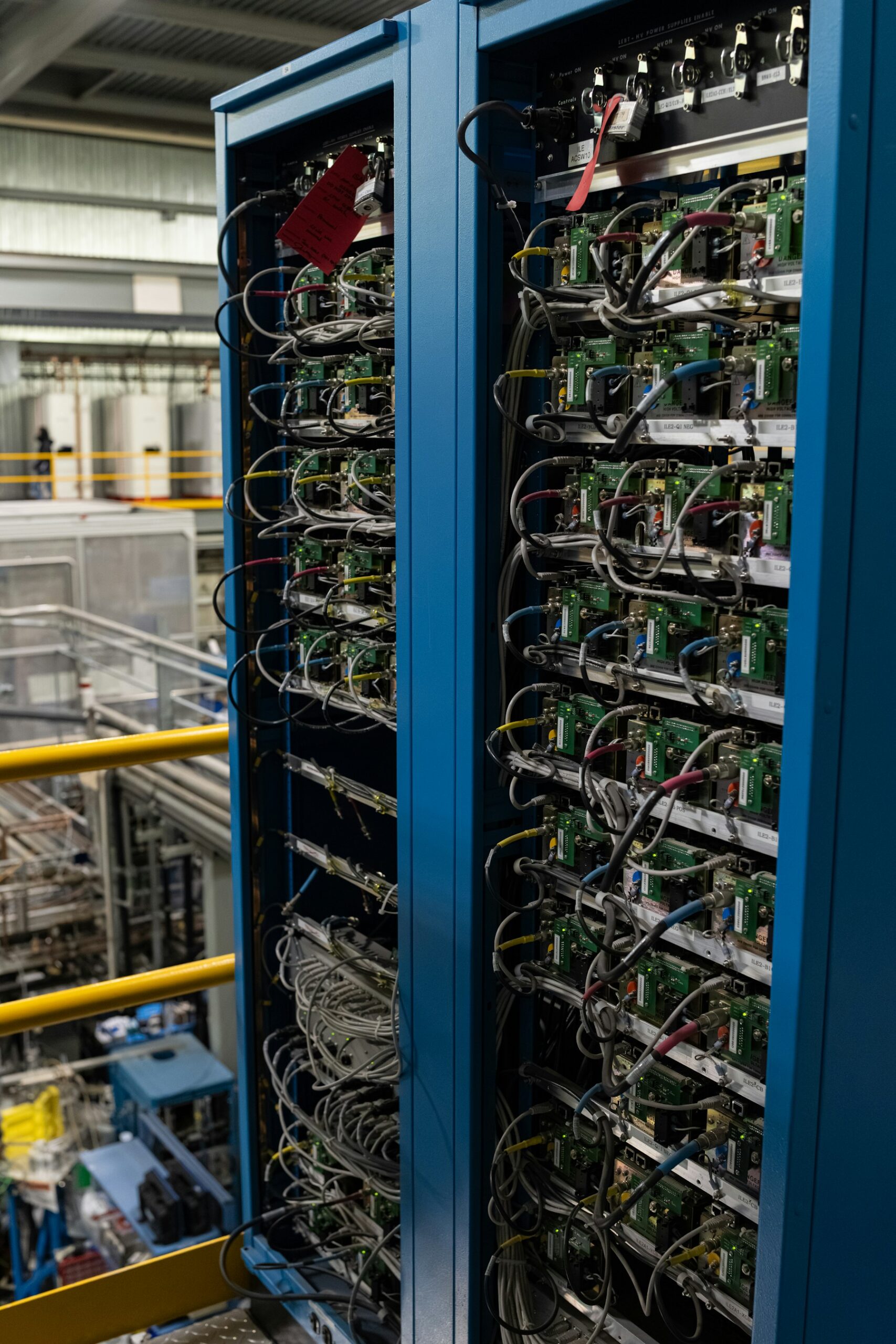
Featured image: Eric Stoynov / Unsplash. Free to use under the Unsplash License.