
Top New Trends | World News | Opinion
September 26, 2026
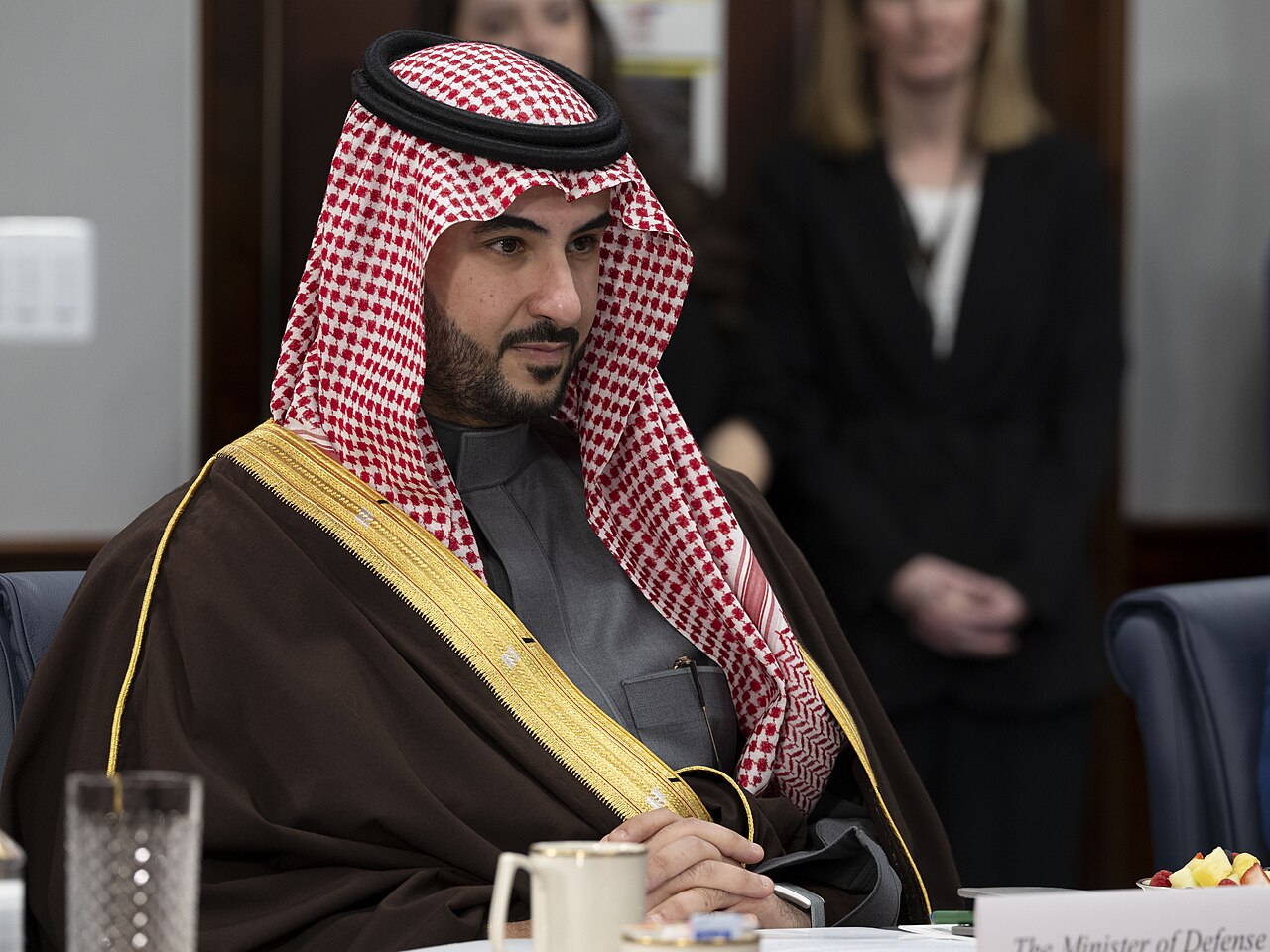
Repeated attacks, reported interceptor shortages and uncertain foreign support demand accountability from Saudi Arabia’s defense minister. His military background does not settle the question of whether he has the strategic leadership this conflict requires.
Saudi Arabia’s defense minister should be judged by the security his ministry delivers. On the public evidence emerging from the current confrontation, Prince Khalid bin Salman has not made a convincing case that he is the right leader for this phase of the conflict.
That is the judgment of this editorial. It rests on the gap between the kingdom’s substantial military resources and the persistent pressure on its defenses—not on an assumption that every enemy claim is true or that every attack can be prevented.
On September 26, Reuters reported that the Saudi-led coalition said it had intercepted two ballistic missiles and two drones launched toward the kingdom. The missiles were directed toward Khamis Mushait and the drones toward Riyadh. The same report described Prince Khalid’s discussions with Pakistan’s army chief about joint efforts to confront attacks.
Those interceptions deserve recognition. The crews responsible are doing essential work. But a minister’s responsibility extends beyond the successful handling of the latest incoming threat. It includes preparing the country to endure the next wave, preserving freedom of action and developing a credible route toward greater security.
An enormous budget demands a higher standard
SIPRI estimates that Saudi Arabia spent $83.2 billion on its military in 2025, ranking eighth worldwide. That total covers personnel, operations and other expenditure as well as equipment; it is not simply a weapons bill.
A budget of this size creates a legitimate expectation that readiness has been funded alongside equipment purchases. Expenditure alone cannot reveal how long defenses can withstand sustained attacks: that depends on reserves, consumption rates, maintenance and replacement deliveries. The test is whether the ministry planned for those demands before a prolonged confrontation exposed them.
Associated Press reported on September 16, citing two regional officials, that Saudi Arabia was running low on missile interceptors and had sought air-defense assistance from France, Britain, Pakistan and Egypt. Saudi officials did not immediately respond to AP’s request for comment.
The limits of that evidence matter. AP’s sources were anonymous, and the report provides no independently audited inventory or precise measure of how long Saudi stocks could last. Wartime secrecy restricts public scrutiny; an unanswered request for comment does not establish either the scale of a shortage or a wider failure to communicate.
There is also a constraint beyond Riyadh. The same AP report describes depleted American interceptor stocks and shortages in Europe. Such pressures can limit deliveries even to wealthy customers. They complicate any attempt to attribute Saudi vulnerability solely to Prince Khalid, while making contingency planning more consequential.
If the reported strain is accurate, the minister should answer three specific questions through an appropriate review:
- What assumptions about attack frequency and conflict duration determined reserve requirements?
- What replenishment arrangements existed if American supplies became constrained or allied assistance was delayed?
- How were procurement priorities and domestic production plans adjusted as the threat evolved?
Public reporting does not establish which decisions he personally made or whether different choices would have prevented the reported strain. Those are questions for scrutiny, not conclusions to invent. Sensitive quantities can remain confidential while the ministry explains its readiness priorities and provides a credible account of corrective action.
Experience must match the scale of the job
Prince Khalid has military experience. Saudi Press Agency’s published biography describes his service as an F-15 pilot and tactical intelligence officer, including combat missions in Syria and Yemen. He subsequently served as ambassador to Washington, became deputy defense minister in 2019 and took office as defense minister in September 2022.
Those credentials establish relevant tactical and diplomatic experience. Ministerial leadership adds a different obligation: setting priorities across the armed services, testing military advice and ensuring that procurement, logistics and alliances support a sustainable strategy.
Flying combat missions and leading a ministry through a sustained regional confrontation require different kinds of experience. The latter demands judgment across logistics, intelligence, procurement, diplomacy and coordination between services. The published career record cited here does not establish an extensive history of commanding large, combined military formations in prolonged war before his rise to ministerial leadership.
Large-formation command is not a prerequisite for effective civilian defense leadership. The more relevant test is whether a minister can select capable commanders, challenge weak assumptions and coordinate the institutions that sustain them. His background should inform that assessment; it cannot substitute for evidence of performance.
After almost four years as minister, Prince Khalid should be judged on the readiness of the institution he leads. In this editorial’s assessment, the reported pressures demand a more convincing account of that readiness than his credentials alone can provide.
Washington cannot be the contingency plan
Axios reported that Trump considered strikes against the Houthis but held off, citing two US officials.
For Saudi defense planning, the implication is clear: American intervention cannot be treated as an assured response to Saudi need.
The available reporting does not establish precisely what Prince Khalid expected from Trump. It does, however, make contingency planning a central test of his leadership. A ministry must prepare for an ally’s refusal, delay or competing priorities before those decisions become an immediate problem.
His service in Washington makes the question especially pointed: how did his understanding of American priorities inform Saudi contingency plans? Diplomatic access should help a minister anticipate limits on support and prepare alternatives. The reporting cited here does not establish whether those alternatives were inadequate, unavailable or overwhelmed by events.
If Saudi planning depended on intervention that Washington was unwilling to provide, that assumption warrants a searching review. Responsibility would extend beyond one minister, but the defense minister cannot reasonably stand outside that review.
Partnerships must deliver readiness
France’s proposed assistance illustrates both the value and the limits of external support. Euronews reported that Emmanuel Macron planned to provide personnel, radar and defensive systems to protect Yanbu, describing a protective mission rather than participation in combat.
Accepting allied help is sensible. The accountability question is whether that help reinforces a prepared system or fills an urgent gap that should have been anticipated.
Prince Khalid should be assessed on whether partnerships translate into usable capacity: timely deliveries, coordinated planning and dependable support during sustained operations. Seeking assistance can demonstrate sound judgment. The issue for scrutiny is how well that assistance was anticipated and integrated into Saudi readiness.
Saudi industrial reform also deserves recognition. GAMI reported military-spending localization of 24.89% by the end of 2024, toward a target exceeding 50% by 2030. But industrial progress cannot substitute for present readiness. A future manufacturing target offers little reassurance unless current forces have dependable equipment, support and replenishment.
The case for different leadership
No defense minister can guarantee that an adversary will stop attacking. Continued attacks alone do not prove personal incompetence, and decisions on Saudi national strategy are not his alone.
The strongest criticism concerns whether Saudi preparation matched the risks the ministry was expected to manage. Reported supply strain warrants scrutiny of reserves and replenishment; uncertainty over foreign intervention warrants scrutiny of contingency plans. Neither establishes personal negligence, but both give substance to demands for ministerial accountability.
In this editorial’s judgment, Saudi Arabia should seek different defense leadership, with a demonstrated ability to manage complex institutions and sustain readiness under pressure. That is a political assessment of the public record, rather than a finding that Prince Khalid personally caused the reported shortages. The standard for retaining confidence should be a convincing account of preparedness and corrective action.
A leadership change would not automatically solve the kingdom’s problems. It would need to accompany an independent review of readiness, procurement priorities and assumptions about allied intervention. Replacing a name while preserving the same weaknesses would accomplish little.
Saudi citizens deserve a defense establishment whose readiness justifies its resources. Prince Khalid’s time in Washington should have sharpened his understanding of the limits of allied support; his record as minister must now be judged by the resilience built around those limits. In this editorial’s assessment, the public case for continued confidence remains unconvincing. The minister owes the country a clear account of what was prepared, what has proved insufficient and how it will be corrected.
Sources
- Reuters: Saudi coalition says it intercepts Houthi missiles, drones, September 26, 2026.
- SIPRI: Global military expenditure in 2025, April 27, 2026.
- Associated Press: Saudis seek allies’ help as missile defenses run low, September 16, 2026.
- Saudi Press Agency: Biography of Prince Khalid bin Salman, February 24, 2019—in French.
- Saudi Gazette / SPA: Prince Khalid bin Salman appointed deputy defense minister, February 24, 2019.
- Saudi Press Agency: Defense minister takes oath, September 27, 2022.
- Axios: Trump weighed strikes against Houthis before holding off, September 21, 2026.
- Euronews: France offers military support at Yanbu, September 25, 2026—in French.
- GAMI: Localization of military spending reaches 24.89%.