
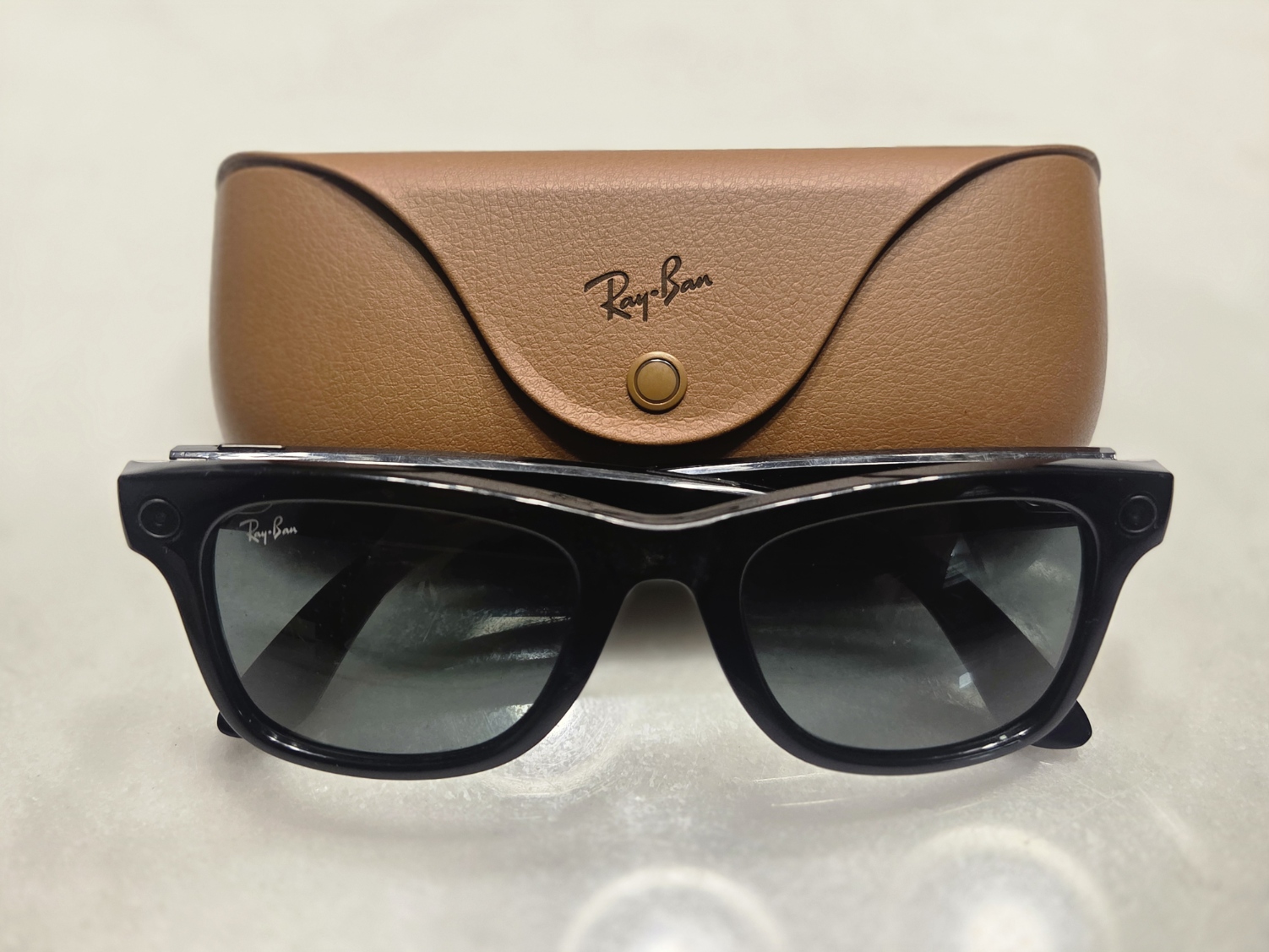
Smart glasses are beginning to look less like a futuristic gadget and more like an ordinary accessory. That may be exactly why the privacy debate around them is becoming harder to ignore.
On September 22, a Reuters report highlighted a widening backlash against AI-powered wearable devices, including camera-equipped glasses and recording pins. The concern is no longer simply what owners can do with the technology. It is what happens to everyone else in the room, on the street, at work or on a date when a camera, microphone and AI assistant can be built into something that resembles conventional eyewear.
The dispute reaches far beyond one product. Technology companies increasingly see wearables as a possible successor, or at least companion, to the smartphone. But the more useful these devices become, the more information they may need to see, hear and process. That creates a fundamental tension between convenience and the privacy of people who never agreed to participate.
Why this is becoming a mainstream issue now
Earlier generations of wearable cameras were conspicuous. A phone raised toward someone is usually recognizable as a recording device. Modern smart glasses can be far less obvious at a glance.
Meta’s Ray-Ban line, developed with EssilorLuxottica, helped push the category toward the mainstream by combining familiar eyewear with cameras, microphones, speakers and AI functions. Newer products across the industry are expanding the idea further, with live assistance, translation, visual recognition and hands-free computing among the features companies are pursuing.
Reuters reported Tuesday that privacy concerns are now challenging the industry’s ambitions, with criticism focusing on covert or poorly understood recording and the broader question of how bystanders can know when a wearable device is collecting information. Some manufacturers are responding with camera-free designs or clearer recording indicators. Reuters also noted that companies are exploring more local processing of data, which could reduce the amount of personal information sent to remote servers.
The problem is not simply whether a camera is recording
The privacy question becomes more complicated when AI is added.
A conventional camera captures an image. An AI-enabled wearable may be designed to interpret what it sees, respond to spoken questions, identify objects, summarize information or retain data needed to provide a service. That distinction matters because the potential privacy exposure can extend beyond the image itself to voices, locations, behavior and contextual information.
Meta has previously changed data settings around its Ray-Ban glasses. In April 2025, TechCrunch reported that Meta AI camera features were being enabled by default unless users turned off the “Hey Meta” voice feature, while voice recordings associated with AI interactions could be stored to improve Meta products. The report also stressed an important limitation: the glasses were not simply recording and storing everything around the wearer continuously.
That nuance is important. Privacy concerns should not be exaggerated into claims that every pair of smart glasses is secretly recording at all times. Devices differ, settings differ, and recording laws vary by jurisdiction. The more defensible concern is structural: as cameras and microphones become less visible and AI systems become more capable, bystanders may have less practical awareness of when technology is observing or processing their presence.
Governments and public spaces are starting to react
The debate is already moving from online complaints into policy.
Australia has emerged as a notable testing ground. The federal government has been considering restrictions on smart glasses in public offices and service buildings, while several local authorities have moved toward tighter rules in sensitive public spaces. The Guardian reported on September 17 that Australian Public Service Minister Katy Gallagher had sought advice on possible restrictions, amid concern about privacy and security.
The same debate illustrates why a blanket ban is not straightforward. Smart glasses can provide meaningful accessibility benefits. Visual assistance, spoken descriptions, navigation and hands-free information can help people with vision or hearing impairments. Australian officials and disability advocates have therefore warned that rules should account for legitimate accessibility uses rather than treating every wearer as a privacy threat.
That tension is likely to appear elsewhere: a device can be both genuinely useful and capable of misuse. Good policy has to deal with both realities.
The social contract around cameras is changing
Smartphones created an informal social signal. When someone points a phone camera, people nearby can often tell that recording may be happening. Smart glasses weaken that signal because the camera travels with the wearer’s gaze.
Manufacturers can add indicator lights, audible cues and software safeguards. Those measures may help, but their effectiveness depends on whether people notice and understand them and whether they are difficult to defeat. The larger challenge is social rather than purely technical: what level of notice should another person reasonably expect before being recorded by a device worn on someone’s face?
That question becomes especially sensitive in schools, changing areas, healthcare settings, workplaces, private conversations and venues involving children. Rules that are acceptable on a public street may be inadequate in a medical office or swimming pool.
There is also a trust problem for the technology industry
The wearable-AI market is arriving at a time when public confidence in AI companies is already under pressure. A separate Reuters/Ipsos poll published September 22 found that 73% of U.S. adults surveyed believed AI companies were not doing enough to prevent potential societal harm. The poll covered broader AI risks rather than smart glasses specifically, so it should not be read as a referendum on wearables. But it provides important context for the environment in which these products are being introduced.
Consumers are being asked to trust companies not only with their own data, but increasingly with devices capable of collecting information about people around them. That is a much higher bar.
What responsible smart glasses could look like
The privacy debate does not necessarily lead to the conclusion that smart glasses should disappear. It points toward design standards that make their operation easier for everyone to understand.
Clear recording indicators that cannot easily be disabled would be one step. Processing more data directly on the device, rather than automatically sending it to the cloud, could reduce exposure. Short retention periods, meaningful deletion controls and strict limits on the reuse of recordings for model training would also make privacy promises more concrete.
Just as important is giving businesses and institutions sensible rules for sensitive spaces. A hospital, school or gym should not have to wait for a serious incident before deciding whether camera-equipped wearables are appropriate.
The next computing platform may need a new etiquette
The technology industry’s bet is that people want computing to become more natural: less time staring down at a phone and more information delivered in the moment. Smart glasses are one of the clearest expressions of that idea.
But a device worn on the face occupies unusual territory. It sees roughly what its owner sees, hears what its owner hears and can potentially connect those inputs to increasingly powerful AI. That makes the interests of the wearer only one part of the equation.
The question facing the industry is therefore not simply whether smart glasses can become good enough to replace some smartphone functions. It is whether they can become socially acceptable enough to wear everywhere.
If companies fail to solve the privacy problem, governments, workplaces and ordinary people may solve it for them through restrictions, bans and social rejection. If they get it right, wearables could become a genuinely useful new layer of computing without turning every conversation into a question about whether someone is recording.
That balance may determine whether smart glasses become the next smartphone, or the next technology people decide is simply too intrusive to welcome into everyday life.
Image credit: CCadio via Wikimedia Commons, licensed under CC BY 4.0.