
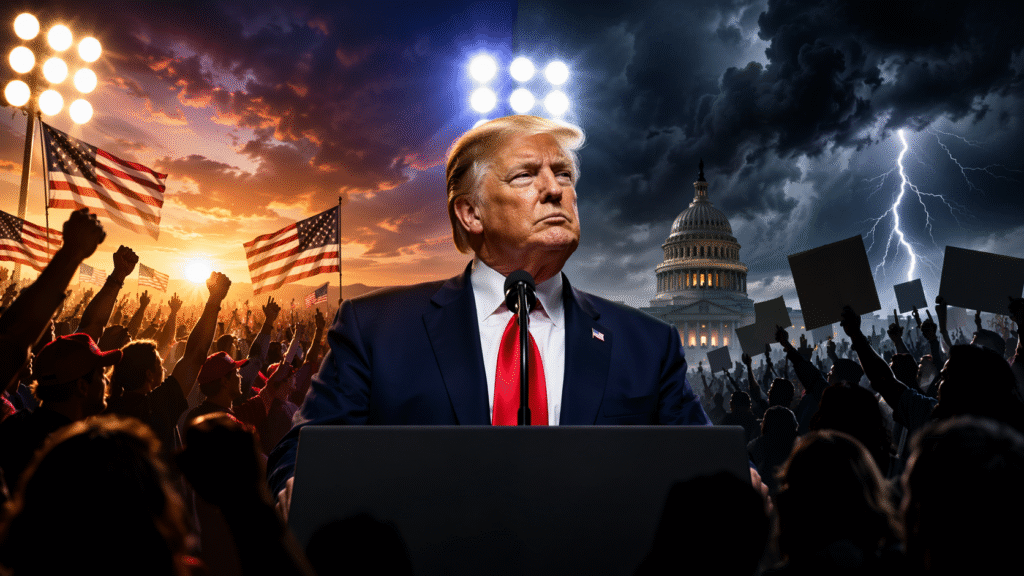
The political landscape has rarely seen a figure as polarizing as Donald Trump. Over the years, his rise, presidency, and post-presidential influence have sparked intense debates, loyalty, and backlash. However, what many observers now describe as the “epic fallout” surrounding Trump is not the result of a single moment—but rather a series of compounding factors.
So, what exactly led to this dramatic unraveling? Below, we break down 10 key reasons behind the Trump fallout, offering a clear, balanced, and easy-to-understand perspective.
1. Controversial Leadership Style
From the very beginning,
Trump’s leadership style stood out.
Direct and Unfiltered Communication
Unlike traditional politicians, he often spoke bluntly, especially on social media. While this energized supporters, it also alienated critics.
Polarization Effect
As a result, his approach deepened divisions across political and social lines, making compromise more difficult.
2. Social Media Influence and Backlash
Social media played a massive role in Trump’s rise—and his fallout.
Amplified Messaging
Platforms allowed him to bypass traditional media. However, controversial posts frequently sparked backlash.
Platform Restrictions
Eventually, major platforms imposed bans or limitations, which significantly reduced his direct communication reach.
3. Legal Challenges and Investigations
Legal scrutiny has been one of the most significant drivers of the fallout.
Multiple Investigations
Trump has faced investigations on various fronts, ranging from business dealings to political actions.
Public Perception Impact
Even without unanimous conclusions, these legal battles shaped public opinion and intensified political tensions.
4. Media Relations Breakdown
Trump’s relationship with the media has been consistently tense.
“Fake News” Narrative
He frequently criticized mainstream media, labeling unfavorable coverage as biased.
Trust Divide
Consequently, public trust split sharply—some distrusted media, while others viewed Trump as undermining credibility.
5. Internal Party Divisions
Interestingly, the fallout is not just external—it also exists within his own political base.
Republican Party Split
While many remained loyal, others distanced themselves, especially after controversial events.
Leadership Struggles
This division created uncertainty about the future direction of the party.
6. Election Disputes and Aftermath
One of the most defining aspects of the fallout revolves around election-related controversies.
Claims and Challenges
Trump’s refusal to accept certain election outcomes sparked widespread debate.
Long-Term Consequences
As a result, trust in electoral systems became a major national issue, influencing political discourse long after.
7. Public Image and Reputation Shifts
Public perception has shifted dramatically over time.
Strong Support Base
Despite criticism, Trump maintains a highly loyal following.
Increasing Opposition
However, opposition has also grown stronger, creating a deeply divided public image.
8. Economic and Policy Debates
Trump’s policies continue to spark discussion.
Support for Economic Policies
Some praise his tax cuts and deregulation efforts.
Criticism of Long-Term Impact
Meanwhile, critics argue that certain policies had uneven or controversial outcomes.
9. Global Relations and Diplomacy
Internationally, Trump’s approach marked a departure from traditional diplomacy.
“America First” Strategy
This reshaped alliances and trade agreements.
Mixed Global Reactions
While some countries welcomed the shift, others viewed it as destabilizing, contributing to broader criticism.
10. Legacy and Future Influence
Finally, Trump’s ongoing influence continues to shape the fallout.
Continued Political Presence
Even outside office, he remains a major force in political conversations.
Uncertain Long-Term Impact
Therefore, the full consequences of his influence are still unfolding.
Final Thoughts: A Defining Political Era
The “Trump epic fallout” is not a single event—it’s a complex, evolving situation shaped by leadership style, media dynamics, legal challenges, and public perception.
In summary:
His communication style reshaped political engagement
Legal and media battles intensified scrutiny
Party divisions and election disputes deepened polarization
His influence remains strong despite ongoing controversy
Ultimately, whether viewed positively or negatively, Trump’s impact on modern politics is undeniable—and the fallout continues to shape the future of political discourse.