Analysis | Updated September 14, 2026
The competition between China and the United States is also a contest for public confidence. Recent polling shows a significant shift toward Beijing in many countries surveyed. The harder question is what that shift means: admiration for China, disappointment with Washington, or a combination of both.
What the public-opinion evidence shows
A Pew Research Center report published July 15, 2026, based on interviews with 42,151 adults across 36 countries and territories from February 8 to May 13, found that China was viewed more positively than the United States in most places surveyed. The U.S. retained an advantage in six, including India, Japan, the Philippines and South Korea.
Canada illustrates the change. Favorable views of the United States fell from 57% in 2023 to 33% in 2026, while China’s rating rose from 14% to 44%, according to Pew’s country comparisons.
These findings measure public attitudes within the surveyed populations. They are not a vote by every country, a measure of diplomatic allegiance, or proof that China has become universally trusted. A higher favorability score also does not necessarily mean approval from a majority.
China’s economic appeal comes with conditions
Infrastructure offers a practical way to understand China’s appeal. The World Bank’s 2019 study, Belt and Road Economics: Opportunities and Risks of Transport Corridors, found that better transport connections could reduce trade costs and increase trade and incomes. It also identified debt, governance, environmental and social risks, stressing the importance of complementary reforms. These were modeled opportunities, not a declaration that every project would succeed.
The implication is straightforward: a useful railway or port can strengthen a partner’s reputation when it improves daily economic life. But construction alone cannot establish lasting trust. Financing terms, maintenance costs, local benefits and public accountability matter just as much as the opening ceremony.
Washington’s loss of goodwill is part of the story
In a July 2026 analysis for the Council on Foreign Relations, Yanzhong Huang argued that the reversal reflected a deterioration in American soft power more than an equivalent surge in China’s appeal. He identified U.S. tariffs, aid cuts and treatment of allies as contributing factors, alongside China’s efforts to improve its international image.
That is an interpretation of the evidence, rather than a precise calculation of what caused each respondent to change their mind. It nevertheless highlights an important distinction: people can become more critical of Washington without endorsing Beijing’s political system or foreign policy.
Why the picture changes from country to country
Geography and security interests complicate any claim of a universal Chinese advantage. Huang’s CFR analysis notes that proximity to Chinese power and maritime disputes can limit Beijing’s appeal. A country seeking infrastructure finance may assess the relationship differently from a neighbor concerned about territorial pressure.
Political values also remain relevant. Pew found that the United States continued to receive higher ratings than China for respecting its people’s personal freedoms, although that advantage had narrowed. Views of a country, its government and its leader should therefore be treated as separate measures.
Economic strength and military power do not equal respect
The distinction also applies to military capability. Reuters’ reporting on SIPRI’s 2024 figures put U.S. military spending at $997 billion, the highest worldwide. That establishes the scale of American expenditure in that year; it does not establish how much confidence other societies place in American leadership.
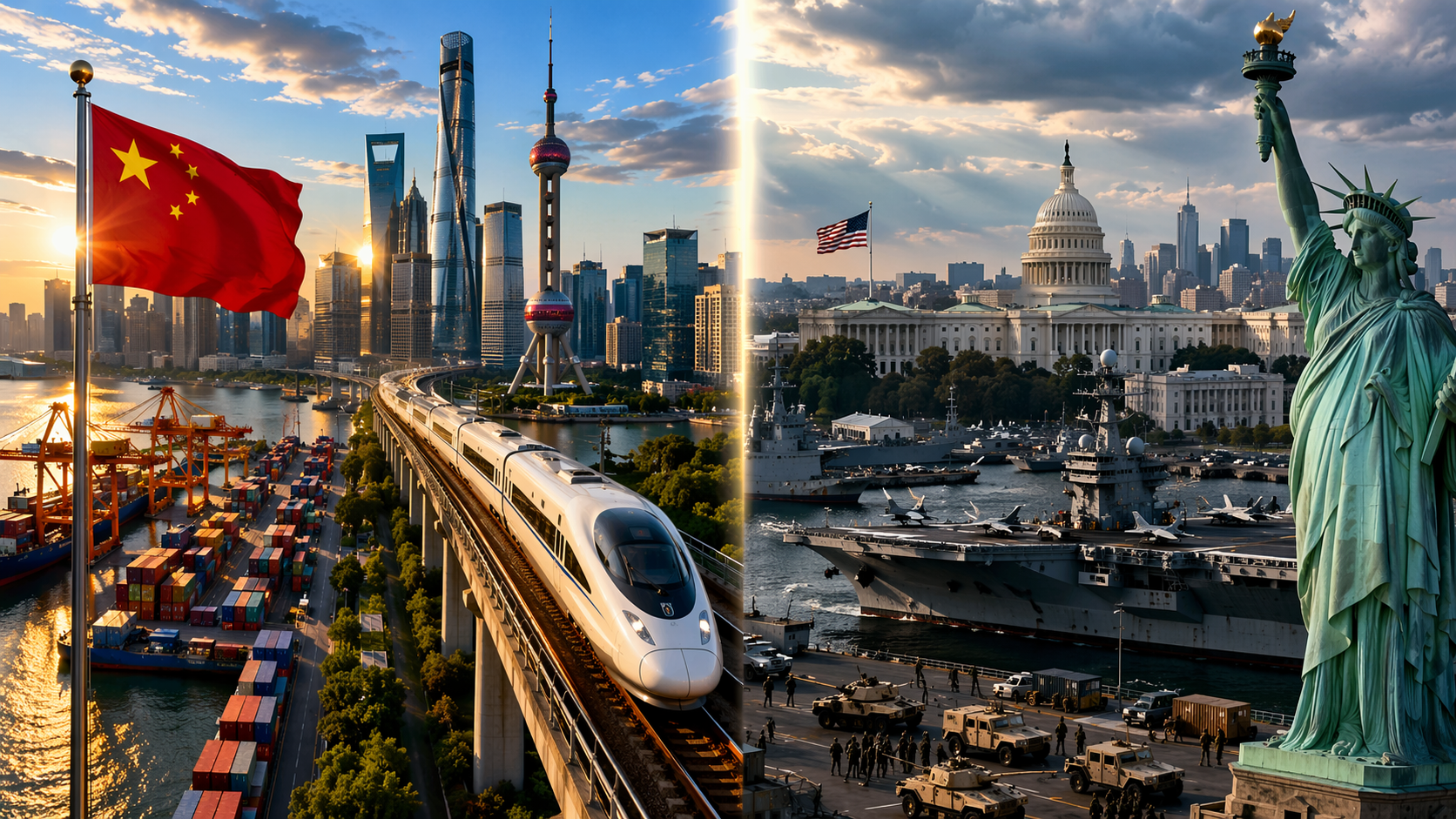
Describing China simply as a builder and the United States simply as a military power obscures the real question. Economic relationships can generate both opportunity and dependence. Security relationships can provide reassurance while also provoking disagreement. Their reputational effects depend on the country, the policy and the people affected.
The real test is whether confidence lasts
China’s stronger position in these surveys deserves attention. It should also be assessed with the same scrutiny applied to American claims of leadership. The useful questions are whether commitments are kept, whether partnerships deliver broad benefits, and whether other countries retain meaningful room to make their own decisions.
For Washington, the findings underline the cost of losing goodwill. For Beijing, they offer an opportunity rather than a guarantee of enduring leadership. Lasting respect requires a record of conduct that people and governments can rely on.
Editor’s note: This article has been substantially revised to distinguish survey findings from analysis, add inline sources, and replace unsupported generalizations. Research dates are stated so readers can assess the evidence in context.