News briefing | September 6, 2026
Renewed fighting involving the United States and Iran, and deadly Israeli strikes in Lebanon and Gaza, have brought several Middle East flashpoints back into focus. The immediate questions concern civilian safety, shipping through the Strait of Hormuz and whether diplomacy can contain further retaliation.
What is happening around the Strait of Hormuz?
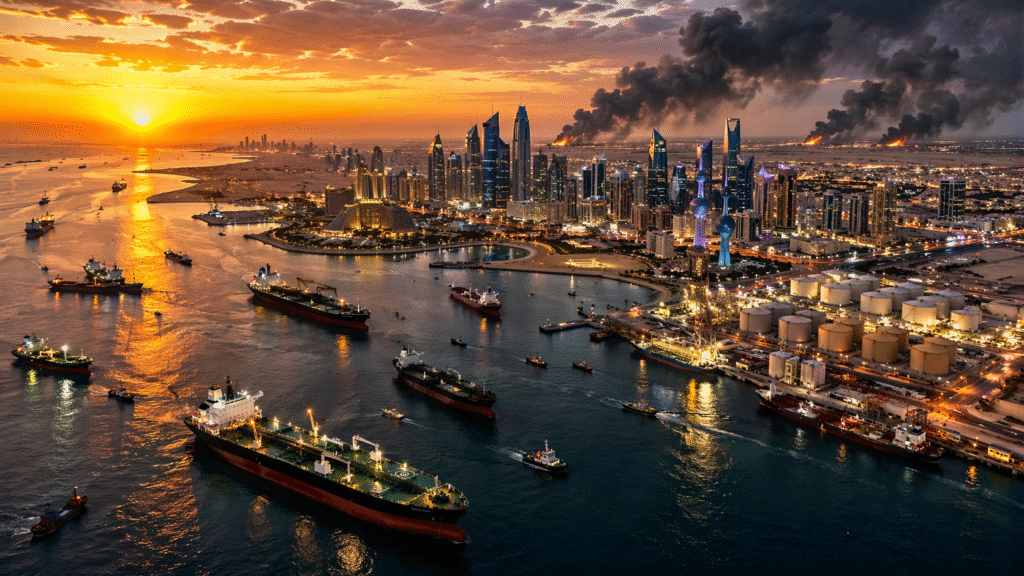
Iran said on September 6 that it planned an exclusion zone near the Strait of Hormuz, although the boundaries and implementation remained unclear. Tehran also claimed it had hit an unmanned U.S. vessel; the U.S. military denied that claim. The competing accounts should not be treated as confirmation that a ship was struck. Associated Press reporting.
A day earlier, U.S. forces struck three Iranian vessels after Iranian ballistic missiles targeted two U.S. Navy ships, according to Reuters. Iranian parliamentary speaker Mohammad Baqer Qalibaf warned that further attacks would bring a stronger response. Tehran also announced an economic coordination effort to address wartime pressures and sanctions. Reuters, September 6.
Lebanon and Gaza: civilians remain exposed
In southern Lebanon, Israeli strikes killed seven people, including two women, on September 6, Lebanon’s health ministry said. Israel described its operations as retaliation for Hezbollah drone attacks in areas occupied by Israeli troops. The violence continued despite a June ceasefire. Reuters reporting on Lebanon.
In Gaza, health officials said an Israeli strike on a vehicle killed a father and his eight-year-old daughter and injured six other people. Israel said it targeted a Hamas militant and was examining the outcome. Reuters also reported further fatalities in separate incidents that day. Reuters reporting on Gaza.
In Iran, a Reuters investigation examined the September 1 explosion at a wedding in Kuhestak. Weapons specialists assessing verified imagery considered a direct hit by a U.S. munition likely. Human rights monitors cited by Reuters reported four deaths and at least 68 injuries. U.S. officials said an investigation was underway; the experts’ assessment is not a final official finding. Reuters investigation, updated September 4.
Why the escalation matters beyond the region
Energy markets have already reacted. Reuters reported that Brent crude traded at $97.29 a barrel at 12:00 GMT on September 3, with both Brent and U.S. crude reaching six-week highs that session amid supply concerns. Those figures describe that trading session, rather than a live September 6 price. Reuters energy report.
Analysis: Continued disruption could put pressure on transport and business costs, but a rise in crude prices does not translate into an identical or immediate increase at every petrol station. The duration of disruption, available supply and local conditions all matter.
Why a lasting agreement remains difficult
The Council on Foreign Relations identifies Iran’s nuclear programme, access through Hormuz and sanctions relief as unresolved issues. Its conflict overview describes how earlier ceasefire arrangements interrupted large-scale fighting without delivering a durable settlement. This background helps explain why a temporary reduction in attacks does not necessarily resolve the underlying confrontation. CFR conflict background.
What to watch next
Analysis: The clearest signals will be whether further maritime attacks are independently confirmed, whether Iran provides concrete details of its proposed zone, and whether mediators secure commitments that hold. Investigations into civilian deaths also deserve sustained attention alongside military announcements.
For readers following the crisis, distinguish an announced threat from an action already carried out, and a government claim from independently established evidence. This briefing reflects the linked reporting available on September 6, 2026; subsequent developments may change the picture.