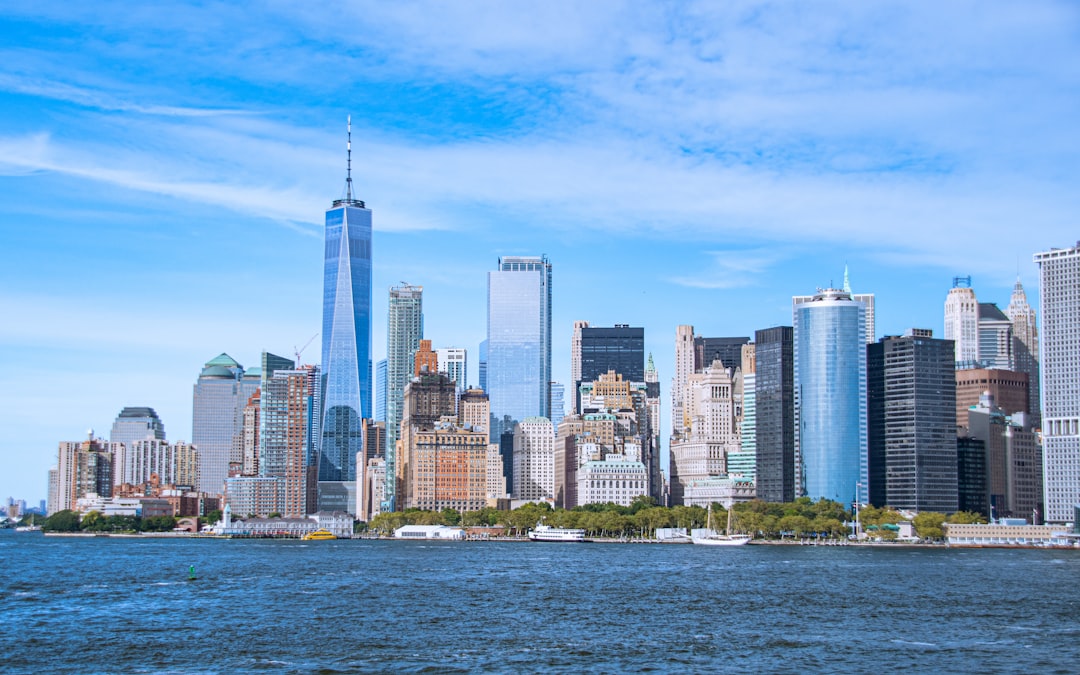
Twenty-five years after the September 11, 2001 terrorist attacks, the United States is again gathering to read the names of the dead, remember the first responders and confront a harder question: how much of the world created after 9/11 is still with us?
The attacks killed nearly 3,000 people after al-Qaida hijackers struck New York’s World Trade Center and the Pentagon, while a fourth hijacked aircraft crashed in Pennsylvania after passengers and crew fought back. On September 11, 2026, memorial ceremonies are marking a full quarter-century since a morning that changed American life and international politics.
The anniversary is not only about history. The security systems, wars, political debates and public-health consequences that followed 9/11 continue to shape the present.
Security became part of ordinary life
For Americans who remember flying before 2001, today’s airport experience would once have seemed extraordinary. The post-9/11 era brought a sweeping expansion of aviation security, intelligence coordination and federal counterterrorism infrastructure. The Department of Homeland Security was created in the aftermath, while the USA PATRIOT Act expanded government authorities and triggered a long-running debate over the balance between security and civil liberties.
Many of these measures became so routine that younger travelers have never known anything else. That may be one of 9/11’s most durable effects: emergency responses gradually became permanent features of everyday life.
The attacks transformed U.S. foreign policy
September 11 also redirected American power abroad. The United States invaded Afghanistan in 2001 to dismantle al-Qaida and remove the Taliban government that had sheltered its leadership. Two years later, the U.S. invaded Iraq, a war whose justification and relationship to the broader post-9/11 security environment remain intensely debated.
The consequences stretched across decades: military deployments, trillions of dollars in spending, deaths and injuries among service members and civilians, displacement, political instability and a broader debate about how military power should be used against terrorism.
Even after the U.S. withdrawal from Afghanistan in 2021, the central dilemma never disappeared. Governments still face threats from organized extremist groups, but increasingly also from individuals radicalized online and from newer forms of violent extremism that do not fit the structures familiar to security agencies in 2001.
A threat that has changed rather than vanished
Reporting ahead of the anniversary highlights how counterterrorism has evolved. European officials have warned that authorities must contend not only with jihadist networks but also with violent online subcultures capable of influencing young people without traditional organizational structures.
This matters because many of the security institutions built after 9/11 were designed to detect networks: financing, travel, communications and identifiable organizations. A fragmented digital threat can be harder to recognize before violence occurs.
At the same time, democratic societies continue to wrestle with an old post-9/11 question in a new technological environment: how much surveillance is justified to prevent violence, and where should the limits be?
The health toll did not end in 2001
The human cost of 9/11 also extends far beyond those who died that morning. Reuters reported ahead of the anniversary that the World Trade Center Health Program now serves more than 150,000 people affected by 9/11-related illnesses. First responders, recovery workers, survivors and others exposed to the toxic environment around Ground Zero have faced cancers, respiratory illnesses and other conditions years later.
That continuing medical burden changes the meaning of the death toll. September 11 was a single day, but for many families its health consequences have unfolded over decades.
A generation now knows 9/11 only as history
Twenty-five years is also enough time to create a significant generational divide. Millions of adults today were either children in 2001 or had not yet been born.
An AP-NORC/Ipsos survey reported around the anniversary found that roughly half of U.S. adults still regard 9/11 as one of the most pivotal events of their lifetimes. But personal memory inevitably fades as a larger share of the population encounters the attacks through classrooms, documentaries, museums and family stories rather than lived experience.
That makes institutions such as the National September 11 Memorial & Museum and the Smithsonian increasingly important. The Smithsonian is marking the anniversary with artifacts connected to the attacks, helping younger visitors understand the event through objects and individual stories rather than statistics alone.
Muslim Americans also lived through the aftermath
Any serious assessment of the post-9/11 period also has to acknowledge the suspicion, discrimination and hostility experienced by many Muslim, Arab, Sikh and South Asian Americans after the attacks. Counterterrorism was necessary, but fear sometimes spilled beyond legitimate security measures and onto communities that had no connection to terrorism.
Twenty-five years later, Muslim Americans are deeply embedded across American civic, professional and political life. That history is a reminder of an important distinction that can become blurred during periods of fear: violent extremist organizations do not represent entire religions or ethnic communities.
What 9/11 still teaches
The most useful lesson from an anniversary is not that history repeats itself exactly. It rarely does. The lesson is that a single shock can alter institutions, politics and ordinary habits for decades.
Before September 11, many Americans could not imagine the security architecture that would soon become normal. After the attacks, decisions made under extraordinary pressure shaped wars, laws, airports, intelligence agencies and public attitudes for a generation.
That should encourage caution whenever governments confront a new crisis. Some emergency measures are necessary. Some save lives. But policies created during moments of fear can outlast the emergency itself, and their consequences can be difficult to reverse.
On the 25th anniversary, remembrance should therefore include more than the geopolitical legacy. At its center are nearly 3,000 people whose ordinary Tuesday morning became a national tragedy, the families who carried that loss forward, the first responders who ran toward danger, and the people who continue to live with illnesses connected to the disaster.
A quarter-century later, that human story remains the clearest reason to remember.
Sources
- Associated Press — U.S. marks 25 years since the Sept. 11 attacks
- Reuters — Twenty-five years after 9/11, Americans still live with its legacy
- Reuters — The long death toll: How 9/11 is still claiming its first responders
- Associated Press — The changing terrorism threat 25 years after 9/11
- Associated Press — Smithsonian marks the 25th anniversary with rare artifacts
Featured photo: Siegfried Poepperl / Unsplash.