
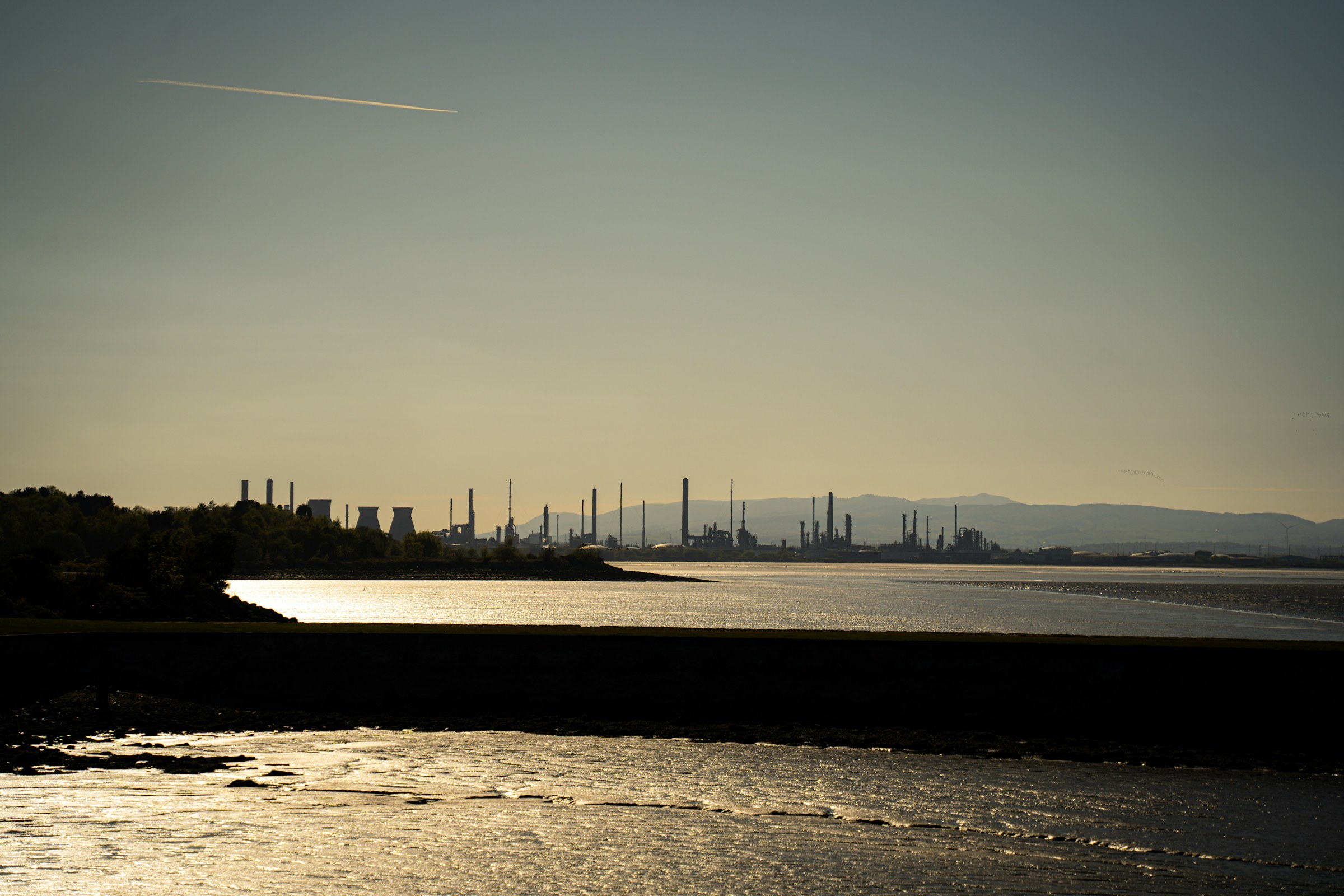
A new strike on Saudi Arabia’s energy infrastructure has added another layer of risk to a Middle East conflict that is already disrupting oil markets and some of the world’s most important shipping routes.
Saudi Arabia temporarily shut its East-West oil pipeline after a drone attack that Reuters reported was launched from Iraq. The pipeline has become especially important during the wider U.S.-Iran conflict because it allows Saudi crude to move from the kingdom’s eastern oil-producing region toward the Red Sea without relying on the Strait of Hormuz.
The timing is particularly serious. Iran-related disruption around Hormuz has already constrained energy flows, while Yemen’s Iran-aligned Houthi movement has advanced around the Bab el-Mandeb area at the southern entrance to the Red Sea. Reuters reported on September 12 that the East-West pipeline had recently been carrying roughly 4 million to 5 million barrels per day. Its shutdown therefore removes, at least temporarily, an important alternative route at a moment when redundancy in the global energy system is unusually valuable.
Why this pipeline matters
Saudi Arabia’s East-West system was designed in part to give the world’s largest oil exporter an alternative to the Persian Gulf. In normal conditions that flexibility is useful. During a regional war, it becomes strategically important.
The latest attack illustrates a broader vulnerability: an energy system does not need to lose all production to experience a major shock. Pipelines, export terminals, tankers, insurance markets and narrow sea lanes can all become bottlenecks. When several are under pressure simultaneously, traders must price in the possibility that future barrels will be harder or more expensive to move even when the oil itself remains underground and available.
That risk is already visible in prices. Brent crude moved above $100 a barrel this week as Middle East tensions intensified. Higher crude prices do not translate instantly or evenly into consumer costs, but a sustained increase can eventually feed into gasoline, diesel, aviation, freight and manufacturing expenses.
The geography is becoming the story
The Middle East has always mattered to global energy because of its reserves. The current crisis is demonstrating that geography can be just as important as geology.
Three routes now deserve particular attention: the Strait of Hormuz between Iran and Oman, the Bab el-Mandeb between Yemen and the Horn of Africa, and Saudi Arabia’s cross-country pipeline network connecting its eastern oil fields with the Red Sea. Trouble affecting more than one of those routes at the same time reduces the number of practical alternatives available to exporters and shipping companies.
The latest Houthi advances add to that concern. Reuters reported that the group seized Perim Island in the Bab el-Mandeb area, strengthening its position around a waterway connecting the Red Sea with the Gulf of Aden. AP also reported that Iraq is investigating allegations that Iran-backed militias operating from its territory were involved in the Saudi pipeline attack. Iraq has moved to contain the fallout, including dismissing a local military commander and investigating the incident.
Responsibility should be described carefully. While officials have traced the drones to Iraqi territory and attention has focused on Iran-backed armed groups, identifying the precise actors behind attacks during an active conflict can take time. Claims by governments and armed groups should not automatically be treated as independently established facts.
Why consumers outside the Middle East should care
The first effect of an energy disruption is usually seen in wholesale markets, but the consequences can spread through ordinary household budgets. Fuel is an input into almost everything that moves: groceries, parcels, construction materials, manufactured products and airline passengers.
If elevated oil prices persist, airlines can face higher jet-fuel bills, trucking companies can face higher diesel costs and manufacturers can pay more for transport and petrochemical inputs. Companies may absorb some of those increases, but prolonged pressure tends to make at least part of the cost visible to consumers.
The inflation consequences are also important for central banks. Policymakers in North America and Europe have spent years trying to stabilize inflation expectations. A geopolitical energy shock complicates that job because interest rates cannot produce more oil or reopen a shipping lane. Central banks must instead judge whether higher energy costs are temporary or whether they are beginning to spread into wages and broader prices.
Shipping and insurance may matter almost as much as oil
Energy markets are not only about the headline price of a barrel. Ships must be available, crews must be willing to sail, insurers must be prepared to cover voyages and ports must remain accessible.
When military risk increases near a chokepoint, insurance premiums can rise and vessels may reroute or wait for safer conditions. Longer journeys consume more fuel and tie up ships for more days. That can tighten shipping capacity even without a formal closure of a route.
This is why the situation around the Red Sea deserves attention beyond the petroleum market. The Bab el-Mandeb is part of the route linking Asia and the Middle East with the Suez Canal and European markets. Sustained insecurity there can affect container shipping as well as energy cargoes.
Saudi Arabia faces a difficult strategic choice
For Riyadh, the challenge is not simply repairing infrastructure. Saudi leaders must decide how to protect energy assets without widening a conflict that could expose additional facilities to attack.
Reuters reported that Saudi Arabia had not immediately retaliated after the pipeline strike, while Iraq moved to investigate activity on its territory. That restraint may create room for diplomacy, but it does not eliminate the underlying vulnerability.
A broader Saudi military response could deter some attacks, but it could also revive a more intense confrontation with the Houthis or other Iran-aligned groups. Avoiding retaliation, meanwhile, carries its own risks if armed groups interpret restraint as an opportunity to continue pressure. There is no cost-free option.
What happens next
The most important question is whether the pipeline shutdown proves brief and isolated or becomes part of a pattern of repeated attacks on alternative export infrastructure.
A quick repair combined with diplomatic de-escalation could calm markets. The opposite scenario — continued attacks on Saudi infrastructure alongside persistent disruption near Hormuz and Bab el-Mandeb — would create a much more serious test for the global energy system.
Oil prices above $100 are already a warning that traders see meaningful supply risk. But price movements during wartime can reverse quickly when diplomatic or military conditions change. Forecasts should therefore be treated cautiously rather than as certainty.
The larger lesson is that globalization depends on infrastructure most people rarely think about. A pipeline across the Saudi desert, a narrow strait beside Yemen and tanker traffic through the Persian Gulf may seem distant from households in Toronto, London or Chicago. Yet disruption at those points can eventually appear in fuel bills, airline fares, delivery costs and inflation data thousands of kilometres away.
Sources
Reuters, Sept. 12, 2026 — Saudi pipeline shutdown, Houthi advances and oil-market implications.
Associated Press, Sept. 12, 2026 — Iraq’s investigation and response to allegations surrounding the pipeline attack.
ABC News Australia, Sept. 12, 2026 — additional reporting on the pipeline closure and regional shipping situation.
This article analyzes a rapidly developing conflict. Military claims, casualty figures and infrastructure conditions can change as new information becomes available.