
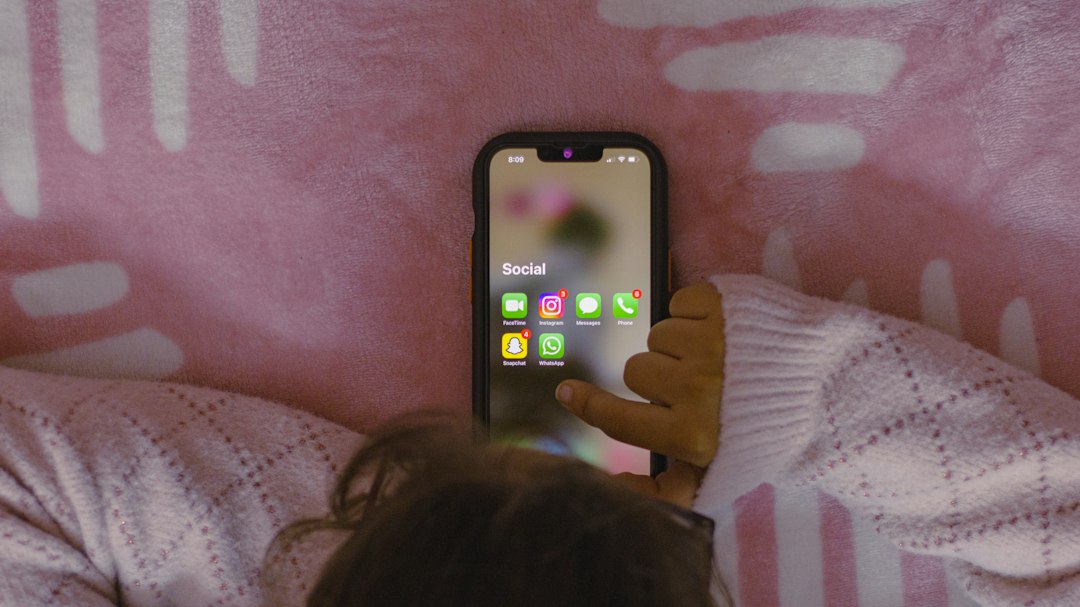
A global experiment in how children use the internet is moving from theory to policy.
Australia’s restrictions on social-media access for children under 16 are increasingly becoming a reference point for governments confronting the same uncomfortable question: should minors have largely open access to platforms designed to maximize attention, or should the state draw a hard age line?
The debate gained fresh momentum on September 20 when Australian Prime Minister Anthony Albanese said Apple’s Tim Cook had described the country’s approach as “world-leading” during a meeting in California. Reuters reported that Australia became the first country to impose an under-16 social-media ban and that other governments are considering related measures.
What makes the story bigger than one country is the direction of travel. Europe is also moving toward stricter rules for minors, while governments elsewhere are debating age verification, parental controls, limits on addictive design and restrictions on AI chatbots. The result is a potentially fundamental change in the relationship between children, parents, technology companies and the internet.
Why this issue is accelerating now
For years, governments largely relied on platforms and parents to manage children’s online experiences. That model is under pressure. Concerns now extend beyond inappropriate content to algorithmic recommendation systems, endless scrolling, unsolicited contact, targeted profiling and increasingly sophisticated AI companions.
The European Commission has proposed a Kids Act that would impose stronger protections for minors. According to Reuters’ September 17 report, the proposal would bar social-media access for children under 13, require parental controls for users aged 13 to 15, restrict addictive design features and make AI companions aimed at minors off by default. The proposal still requires approval from EU member states and the European Parliament, so its final form could change.
That distinction matters. Headlines about “bans” can make the policies sound simpler than they are. In practice, regulators must decide which services count as social media, how ages are verified, whether parents can override restrictions, how platforms should treat existing accounts and what happens when children use virtual private networks or false birth dates.
The case for tougher limits
Supporters argue that the basic imbalance is obvious: children are being asked to navigate products built by some of the world’s most sophisticated technology companies, often using systems specifically optimized to keep users engaged.
Governments have become especially concerned about features that can turn a few minutes of intended use into long sessions of passive consumption. The United Kingdom has separately examined measures including limits on infinite scrolling and other design techniques associated with compulsive use. Prime Minister Keir Starmer said in April that platforms needed to address never-ending scrolling as Britain considered additional protections for younger users.
The strongest argument for regulation, however, is not that every child is harmed by social media. That would be too broad a claim. It is that the risks can be serious enough, and children’s ability to assess them limited enough, to justify safeguards that would be considered excessive for adults.
A UNICEF study reported earlier this month illustrates why the debate has become urgent. Reuters reported on September 3 that UNICEF estimated about 20 million internet-using children across 21 surveyed countries had experienced online sexual exploitation or abuse in a single year. The research covered several forms of abuse and exploitation and should not be interpreted as proof that social media alone caused those outcomes. But it underscores the scale of online-safety risks regulators are trying to address.
The privacy problem governments cannot ignore
The opposing argument is also substantial. To stop a 12- or 14-year-old from opening an account, a platform first needs a reliable way to determine the user’s age. That can require identity documents, facial-age estimation, third-party verification or other personal information.
Critics warn that a policy intended to protect privacy and safety could unintentionally encourage the collection of more sensitive data from everyone, including adults. Technology industry groups have also argued that broad restrictions can duplicate existing rules or create new privacy risks.
This is the central policy trade-off: a weak age check can be easy to evade, while a strong age check can become intrusive. Regulators will have to prove they can build systems that establish age without creating unnecessary databases of identity information or excluding people who lack standard documentation.
Parents may gain leverage — but not a substitute for parenting
For families, the emerging rules could shift an argument that has largely happened inside homes into law. Parents who already restrict phones or social media may welcome a common age standard because it reduces the familiar complaint that “everyone else is allowed.”
But legislation cannot decide how a family should handle every screen, message or online friendship. Nor does an age threshold automatically make a platform safe on a teenager’s birthday. Digital literacy, parental involvement, school policies and platform design remain important even if governments impose formal limits.
There is also a legitimate question about what young people lose when access is restricted. Social platforms can provide community, creative outlets, educational material and contact with distant friends and relatives. Policymakers therefore face a difficult task: reduce identifiable harms without treating all online participation as harmful.
A global precedent is being built in real time
Australia’s importance is not simply that it acted first. It is that other governments can now watch what happens: whether children migrate to smaller services, whether age verification works, whether enforcement survives legal challenges and whether the restrictions measurably improve safety.
If the model works, the internet used by a 13-year-old in 2030 could look substantially different from the one teenagers use today. If it fails, governments may turn instead toward narrower rules targeting platform design rather than access itself.
Either way, the era in which social-media companies could assume that young users would enter their platforms under broadly the same rules as adults appears to be ending.
The question is no longer only whether governments should protect children online. It is how far they can go without creating a new set of problems involving privacy, speech, enforcement and digital exclusion.
This article is for general informational purposes and reflects developments reported as of September 20, 2026. Legislative proposals can change during negotiation and implementation.