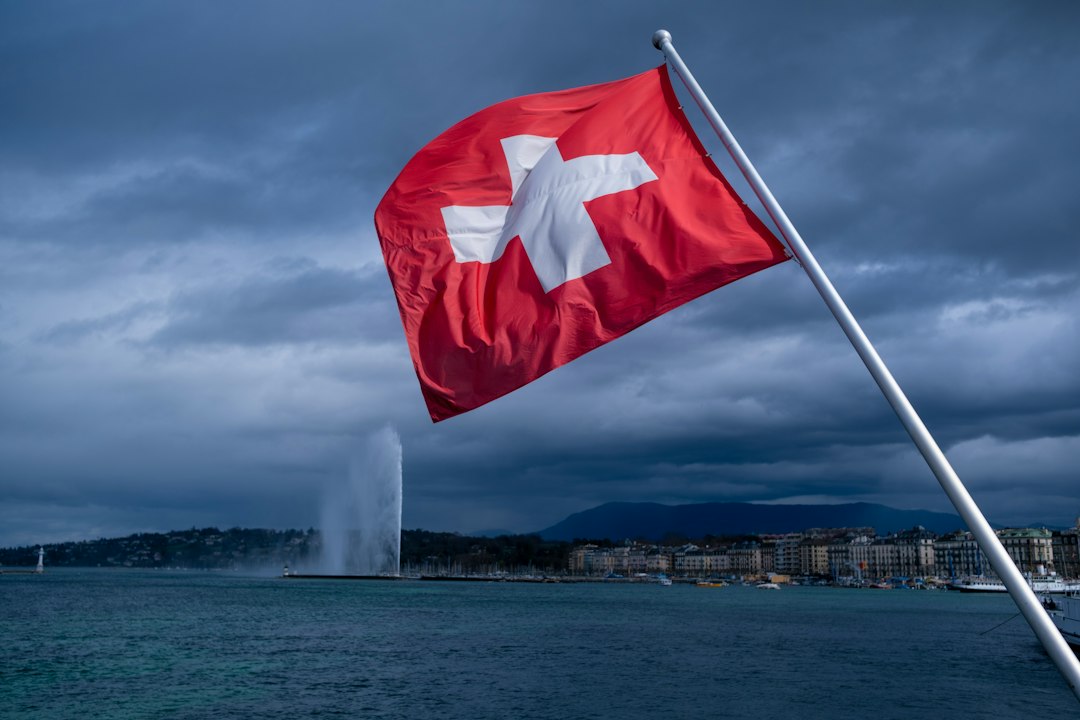
Switzerland is not voting on whether to abandon neutrality. It is deciding whether neutrality should become a much tighter constitutional rule—one that would sharply limit sanctions against countries at war and restrict peacetime cooperation with military alliances such as NATO.
Ballots in the September 27 referendum have been cast and counting is underway. The result matters well beyond Switzerland’s borders because the country’s response to Russia’s full-scale invasion of Ukraine turned an old national principle into an urgent argument about security, diplomacy and the cost of taking—or refusing to take—a side.
The proposal, formally called the “Safeguard Swiss neutrality” initiative, would write a stricter definition into the constitution. Late campaign polling pointed to defeat, but the vote itself is a revealing test of what neutrality can mean in a Europe confronting war, sanctions and renewed pressure on national defence.
What the initiative would change
Neutrality has been part of Switzerland’s constitutional order since 1848, but the constitution does not currently prescribe every way it must be applied. Successive governments have retained room to interpret the policy while keeping the country outside military alliances and armed conflicts.
The initiative would declare Swiss neutrality “perpetual and armed.” According to the Federal Council’s official referendum explanation, Switzerland could not join or cooperate with a military or defence alliance unless it were under attack or an attack were imminent. It could not participate in conflicts between other countries, and it could not impose sanctions on belligerent states unless those measures came from the United Nations. Measures aimed at stopping sanctions evasion would remain possible.
That last distinction is central. Switzerland largely adopted European Union sanctions after Russia attacked Ukraine in 2022. Because Russia holds a veto on the U.N. Security Council, a rule allowing only U.N.-mandated sanctions would make a comparable Swiss response to a future Russian action far harder. The government says existing sanctions against Russia would probably have to be lifted if the initiative passed.
Why Ukraine changed the argument
For decades, Swiss neutrality was often presented as a source of stability: the country stayed outside NATO, maintained an armed defence and offered diplomatic “good offices,” including mediation and protecting-power mandates. The war in Ukraine exposed the ambiguity inside that model.
Supporters of the initiative argue that adopting EU sanctions blurred the line between neutrality and political alignment. Veteran Swiss People’s Party figure Christoph Blocher and other campaigners say a fixed constitutional standard would prevent future governments from weakening neutrality and could restore Switzerland’s credibility as a mediator. Their case is not that Switzerland should be undefended. It is that its defence and foreign policy should be independent of military blocs and punitive coalitions.
Opponents answer that neutrality does not require moral or economic silence when international law is violated. The Federal Council says the present policy protects Switzerland while allowing it to support the international order, work with partners and adjust to new threats. In this view, a ban on most sanctions could look less like impartiality than passivity—especially when the U.N. Security Council is unable to act.
The NATO issue is narrower—and more consequential—than membership
Switzerland is not a NATO member, and the referendum is not a disguised vote to join the alliance. The practical dispute concerns cooperation below the threshold of membership: training, military interoperability, information exchange and participation in NATO’s Partnership for Peace.
The initiative’s wording would allow cooperation only after a military attack or when one was imminent. The government argues that this would be too late. Defence partnerships, shared procedures and communications cannot be built from scratch during a crisis.
That concern has gained weight as European countries reassess preparedness. Switzerland is surrounded by NATO members except for Austria and Liechtenstein. Its geography offers protection, but it does not isolate the country from cyberattacks, airspace violations, sabotage, disrupted trade routes or refugee movements. A state can be militarily neutral and still depend on neighbours for the security of the wider region.
Why supporters see flexibility as the problem
The opposition’s preferred word is flexibility. For supporters of the initiative, that is precisely the danger. If politicians can redefine neutrality in response to each crisis, they argue, the policy becomes a slogan rather than a constraint.
They also contend that Switzerland’s value as a diplomatic intermediary depends on belligerents believing it will not join Western pressure campaigns. That argument has emotional force in a country whose modern identity is closely tied to staying outside major wars.
But mediation does not depend on neutrality alone. It requires consent from the parties, relevant expertise and political trust. Switzerland has continued to host diplomacy while applying sanctions, although Russia has questioned Bern’s neutrality. A constitutional sanctions ban might satisfy one party in a conflict while damaging confidence among others. No referendum can guarantee that Switzerland will be chosen as a mediator.
Polls pointed to rejection, but the debate will survive
Two final surveys reported by Reuters on September 16 showed a clear lead for the “no” side: 68% opposed in a 20 Minuten/Tamedia poll and 63% opposed in a GFS Bern survey for broadcaster SRG. Opinion polls are not official results, and Switzerland’s constitutional initiatives require both a majority of voters and a majority of cantons to pass.
Even a rejection would not settle the larger question. The campaign has forced the government to explain where neutrality ends and solidarity begins. It has also exposed competing anxieties: fear that closer Western cooperation could pull Switzerland into a war, and fear that rigid isolation would leave it less secure and less able to respond to aggression.
The result will also be read abroad. European governments are trying to coordinate sanctions, arms production and civil defence while managing political fatigue over prolonged conflict. A Swiss move away from sanctions would create a potential gap in that system because the country is a major financial and commodities-trading centre. A rejection would preserve the government’s room to align with partners, but it would not convert Switzerland into an ally or end domestic resistance to that alignment.
What to watch after the count
If the initiative passes, the immediate questions will concern implementation: which existing sanctions must end, what forms of military cooperation are prohibited and how quickly laws and agreements must be revised. Legal disputes would be likely because terms such as “cooperate” and “imminent” can carry different meanings in different security situations.
If it fails, attention will shift to how the Federal Council uses the flexibility voters preserved. The government will still face pressure to define clearer limits around NATO cooperation, weapons exports and future sanctions. Rejection would defend the current approach; it would not give officials an unlimited mandate.
The deepest issue is whether neutrality is best protected by strict rules or by the freedom to adapt. Switzerland’s referendum puts that choice directly to citizens at a moment when Europe’s security environment is changing faster than many of its institutions. Whatever the final tally, the vote shows that neutrality is no longer treated simply as an inherited national tradition. It is an active—and contested—strategy for living beside a war.