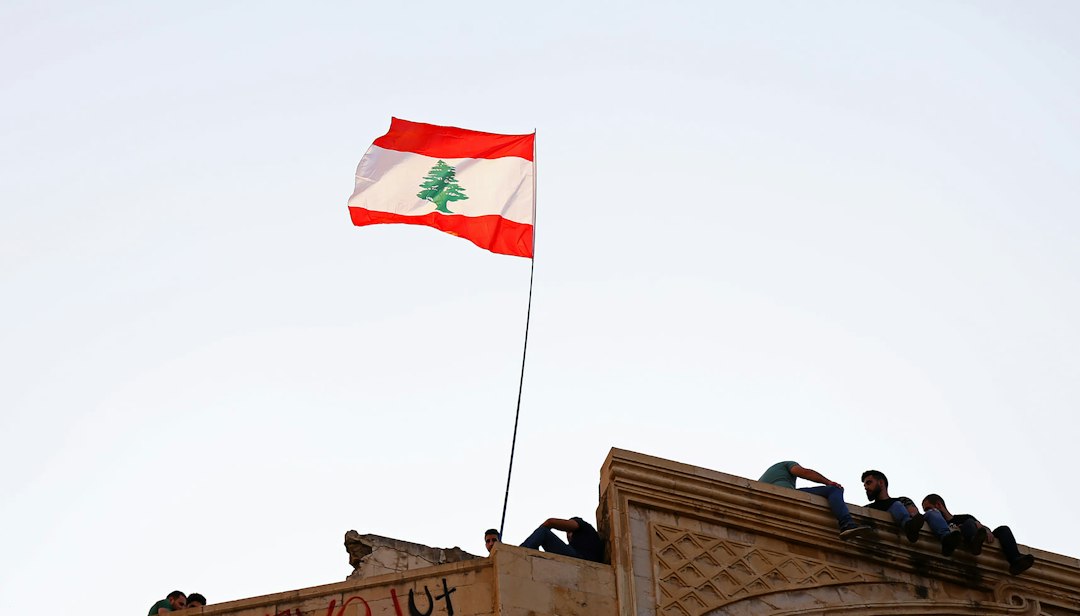
Lebanon’s children are absorbing the combined shock of renewed war and an economic collapse that began years before the latest fighting. A new UNICEF assessment says four in five surveyed households are struggling to afford basic necessities, while 22% reported that children had gone to bed hungry during the previous two weeks.
The findings, published on September 30, describe a crisis that extends far beyond damaged buildings or temporary displacement. Families are cutting food, medical care and education at the same time. Child labour is rising. Psychological distress is widespread. For many young people, the institutions that should protect childhood—schools, clinics and household income—are failing together.
That convergence makes Lebanon’s emergency especially dangerous. War can destroy a classroom overnight; economic collapse can keep a child out of it for years. A ceasefire would reduce immediate harm, but it would not by itself restore bank savings, household purchasing power, public services or lost learning.
Hunger is only one measure of a much broader crisis
According to UNICEF’s new assessment, only 10% of surveyed households with children under five said they could provide a sufficiently nutritious diet. Nearly one-third—31%—reported that children had gone without needed health care, mainly because their families could not afford it.
Fourteen percent said at least one child was working, more than double the share recorded in January 2025. That figure matters because child labour is rarely an isolated choice. It often signals that adult income, savings and social protection have all become insufficient. A child sent to work may leave school, face unsafe conditions and lose future earning potential, extending the crisis into the next generation.
The assessment is based on household reporting, so its figures are best understood as a snapshot of conditions rather than a complete count of every Lebanese child. But the indicators point in the same direction: parents are being forced to trade one essential need against another.
The strain reaches water, education and emotional health. UNICEF estimates that 770,000 children have experienced psychological distress over the past six months. More than half of households said their children’s emotional well-being had worsened, and 63% reported that children were anxious or nervous.
War has turned schools into both shelters and casualties
The renewed conflict between Israel and Hezbollah has magnified damage to an education system already weakened by Lebanon’s financial crisis and earlier rounds of fighting. UNICEF says 436 educational facilities have been damaged and 37 destroyed since the escalation began on March 2.
Around 100,000 children risk losing access to a classroom. At the household level, 46% reported reducing education spending and 17% said their children had stopped attending school. Among children still enrolled, 29% were not learning as expected, often because of emotional distress or difficulty concentrating.
The physical and human losses are substantial. UNICEF reports that 86 teachers have been killed or injured. It says at least 261 children were killed and 1,056 injured between March 2 and the end of September—an average of about seven child casualties a day—with an estimated 12% of injured children now living with a disability.
Reuters reported in early September that more than 340,000 people remained displaced, with some families living inside public schools. Those buildings face an impossible double demand: they are needed as emergency shelter, yet reopening them is essential for children who have already lost months or years of education.
Some schools have tried to operate while continuing to house displaced families. That improvisation can keep limited services alive, but it cannot provide either a stable home or a normal learning environment. Families may also be unable to pay for transportation, books, uniforms or digital access even when a classroom is available.
A financial collapse left families with no cushion
Lebanon did not enter the 2026 conflict with a resilient economy. Its financial system imploded in 2019 after years of unsustainable state spending, banking-sector exposure and political failure to address mounting losses. Depositors were largely locked out of savings, the currency lost much of its value and public services deteriorated.
The country showed signs of stabilization in 2025, helped by tourism and stronger economic activity. The renewed conflict reversed that progress. The World Bank projects Lebanon’s economy will contract by 6.4% in 2026 and inflation will reach 17.5%, driven partly by supply disruption, higher shipping costs and energy prices.
Inflation is not an abstract statistic when household budgets are already exhausted. It raises the cost of food, medicine, rent, electricity and transportation simultaneously. Families with income in Lebanese pounds are particularly exposed, while displacement can eliminate work and add the cost of temporary housing without warning.
The World Bank also warns that conflict-related destruction, interrupted education, damaged health care and the departure of skilled workers could reduce Lebanon’s productive capacity for years. In other words, the same pressures harming children today also weaken the economy they will inherit.
The IMF talks matter—but they cannot substitute for relief
Lebanon is seeking a new staff-level agreement with the International Monetary Fund. Finance Minister Yassine Jaber said the government had advanced banking reforms and wanted to move toward a full financing program, Reuters reported on September 28.
A central obstacle remains the so-called financial-gap law, which is intended to distribute losses from the 2019 crash among the state, the central bank, commercial banks and depositors. The government estimated those losses at roughly $70 billion in 2022; Reuters noted that the figure is likely higher now. Years of political and private resistance have delayed a settlement.
An IMF program could help restore confidence, unlock financing and impose a framework for reform. But macroeconomic repair moves slowly, while hunger and interrupted medical treatment demand immediate action. A credible response therefore needs two tracks at once: emergency support for families and structural reform that prevents aid from merely compensating for permanent institutional failure.
That means protecting social spending even as the government repairs its finances. Banking losses cannot simply be shifted toward households least able to absorb them, and reconstruction funds need transparent oversight. Otherwise, assistance may stabilize symptoms without rebuilding trust.
The crisis is producing long-term damage that aid totals cannot capture
Emergency relief is often measured in meals delivered, shelter spaces opened or medical kits distributed. Those measures are necessary, but they do not fully capture what prolonged instability does to childhood.
A child who repeatedly changes homes may lose records, routines and friendships. A student who misses several school years may never return at the same level. A teenager who enters informal work to support a family can become permanently detached from education. Untreated anxiety can shape behaviour, health and learning long after the fighting stops.
Young adults face a similar narrowing of opportunity. UNICEF says an earlier assessment found that only 22% of people aged 18 to 25 were in school or university, while 67% were unemployed at the time of that survey. Those figures point toward a wider national risk: a generation may conclude that its safest path is to leave Lebanon, draining the country of skills needed for recovery.
Responsibility extends beyond humanitarian agencies
UN agencies and aid groups can treat wounded children, provide cash assistance and help schools reopen. They cannot end armed conflict or resolve Lebanon’s banking losses. Those decisions belong to political and military leaders inside Lebanon, Israel and the wider region, as well as to institutions responsible for the country’s economic governance.
All parties to the conflict are obligated to protect civilians under international humanitarian law. Claims about individual attacks require independent investigation, particularly where access is limited and combatants give conflicting accounts. What the aggregate data show, however, is not in serious doubt: children are being killed and injured, schools are being damaged, and deprivation is deepening.
International donors also face a credibility test. Short-term appeals routinely struggle for funding even as the cost of delayed action rises. Preventing malnutrition, keeping children in school and maintaining primary health care are cheaper—and more humane—than attempting to repair a generation’s lost development later.
Lebanon’s recovery will be judged by what happens to its children
The newest figures are dramatic, but the central lesson is straightforward. Lebanon’s humanitarian emergency is not separate from its economic crisis, and neither can be solved while recurrent war continues.
A durable reduction in violence would allow families to return, schools to rebuild and local businesses to reopen. Financial reform could begin restoring savings, investment and public confidence. Sustained humanitarian support could keep today’s deprivation from becoming permanent damage.
Without all three, households will continue making impossible choices: food or medicine, rent or school, safety or work. UNICEF’s warning is therefore not only about present suffering. It is an early measure of how much of Lebanon’s future is already being lost.
Sources: UNICEF; Reuters on displaced students; World Bank; Reuters on IMF negotiations; UNICEF education assessment.