
America’s artificial-intelligence boom is no longer just a story about chips, chatbots and Wall Street valuations. It is becoming a kitchen-table fight over electricity bills, water, farmland, taxes and who should pay for the infrastructure behind AI.
That conflict moved sharply into the political mainstream on September 19. In rural Ohio, residents and candidates are turning proposed data centers into an election issue, with communities questioning whether the economic benefits promised by the industry justify the demands these enormous facilities can place on local resources. Reuters reported that activists in Defiance, Ohio, are seeking a November vote to restrict all but the smallest data centers, while a cited statewide poll found 71% of Ohioans supported a temporary pause on new construction.
Why this story matters now
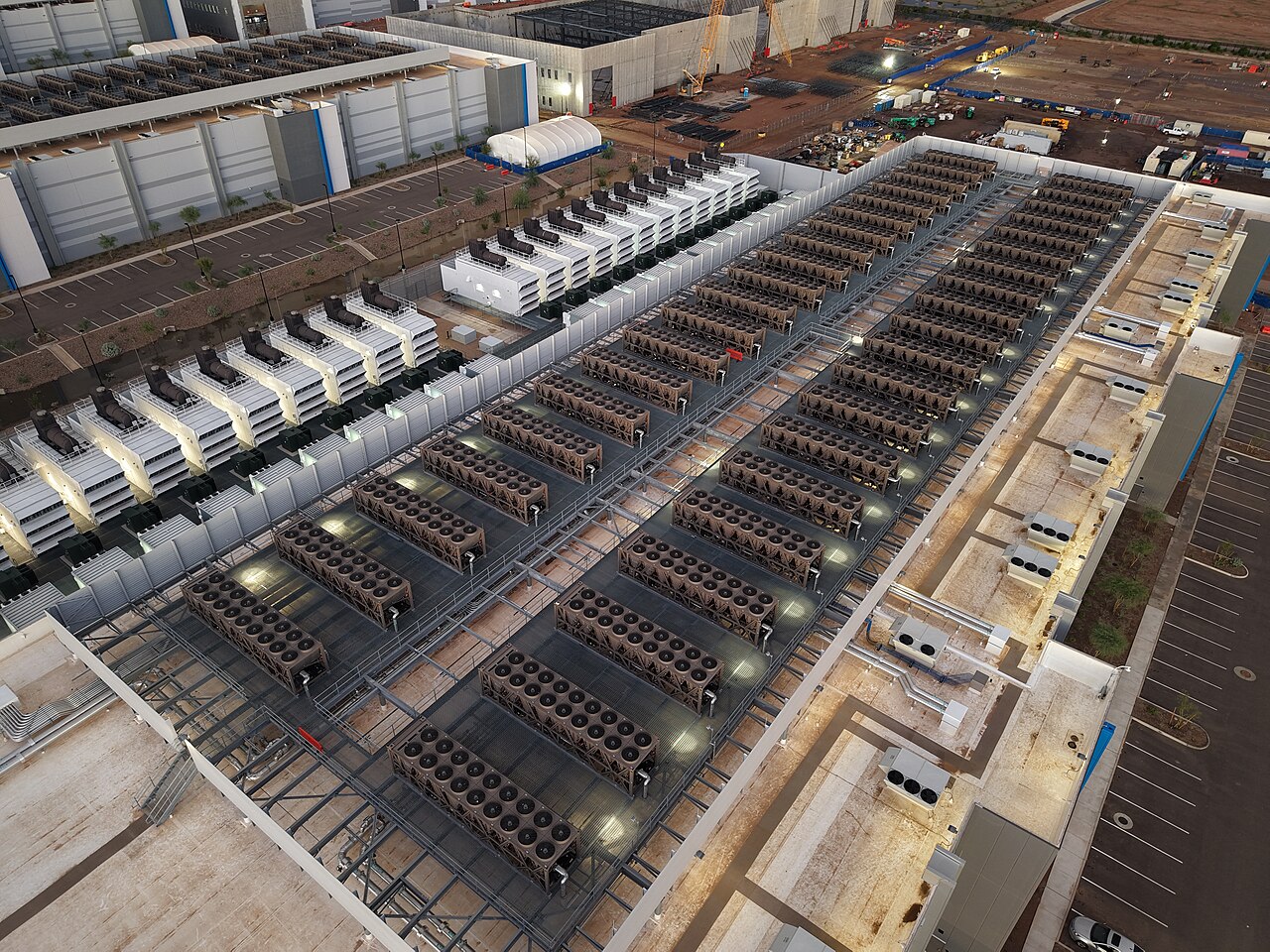
The public debate reaches far beyond one Ohio town. Data centers are the physical engine rooms of the AI economy. They contain the servers, networking equipment and cooling systems that allow companies to train and run increasingly powerful models. But the scale of the new build-out is forcing communities to confront a question that was easier to ignore when computing infrastructure was smaller: how much power, land and public support should the AI boom consume?
The numbers explain why the argument is intensifying. The International Energy Agency projects global data-center electricity consumption will more than double to roughly 945 terawatt-hours by 2030. In the United States, the IEA expects data centers to account for nearly half of the growth in electricity demand through the end of the decade.
That does not mean a new data center automatically raises a household’s electricity bill. Utility regulation, grid investments, contracts, generation costs and local rate structures all matter. But the sheer size and concentration of new demand can require expensive generation and transmission upgrades. That has turned the question of who pays into a politically potent issue.
From tech policy to household economics
For years, the AI debate centered on jobs, privacy, misinformation and the possibility that automation could replace human work. The infrastructure debate is different because its effects can be intensely local. A community may never host an AI laboratory or a major technology headquarters, but it can still be asked to accommodate a vast server campus drawing power around the clock.
A hyperscale AI-focused data center can have a capacity of 100 megawatts or more. The IEA says a 100-megawatt facility can consume as much electricity annually as roughly 100,000 households. The largest projects under construction or planned can be dramatically bigger.
For residents, that turns an abstract technology race into practical questions: Will the grid need new power plants or transmission lines? Will those costs appear in consumer rates? How much water will cooling require? What happens to nearby farmland? How many permanent jobs will remain once construction ends? And are tax incentives producing enough public value?
The backlash is spreading
Ohio is not an isolated case. On September 18, Virginia — already home to the world’s densest concentration of data centers — announced tighter restrictions amid growing public concern. Reuters reported that Governor Abigail Spanberger’s Data Center Accountability Framework includes greater transparency and restrictions on non-disclosure agreements for large projects, alongside incentives intended to encourage cleaner sources of electricity.
Earlier this year, New York imposed a one-year moratorium on construction of large new data centers, another sign that governments are reassessing the speed and terms of the build-out. The issue cuts across traditional political lines because communities can simultaneously want investment and jobs while resisting higher costs or rapid changes to land use.
There is another side to the argument
The case for data-center expansion is substantial. Cloud computing supports hospitals, financial systems, businesses, communications and everyday consumer services, while AI is becoming embedded across the economy. New facilities can bring construction work, permanent technical jobs, local tax revenue and infrastructure investment.
Technology companies also argue that they can structure projects so existing customers do not subsidize their power needs. Some utilities and states are developing special tariffs and other rules intended to assign more infrastructure costs directly to very large electricity users.
The energy mix is evolving as well. The IEA expects renewables to supply about half of the global growth in electricity needed for data centers through 2035, while natural gas, nuclear power and other sources are also expected to play major roles. That means the debate is not simply “AI versus the environment.” It is increasingly about the pace of construction, transparency, resource planning and how costs and benefits are distributed.
Why the politics could get bigger
The most striking development is that data centers are becoming something voters recognize as a local political issue. According to Reuters, Ohio lost more than $2 billion in sales-tax revenue through data-center incentives in 2024 and 2025. That figure is helping fuel arguments over whether states have offered too much to attract technology investment.
At the same time, the AI investment race is accelerating. The IEA reported that capital spending by five major technology companies exceeded $400 billion in 2025 and was on course to rise another 75% in 2026. Electricity use by data centers increased 17% in 2025, with AI-focused facilities growing faster still.
Those trends are on a collision course: enormous private investment pushing toward faster construction, and communities demanding more control over what gets built around them.
The real question: who carries the cost of the AI race?
The strongest version of the public argument is not that data centers should disappear. Modern economies increasingly depend on them. The harder question is whether the rules governing their expansion are keeping pace with their scale.
If technology companies can demonstrate that they are paying the full cost of the electricity infrastructure they require, conserving water, providing meaningful local benefits and operating transparently, some public resistance may ease. If households believe they are being asked to absorb costs while private companies receive large tax incentives, the backlash is likely to deepen.
That is what makes this more than a technology story. AI is beginning to reshape physical America — its power grid, industrial development, land use and local politics. The next phase of the AI revolution may be decided not only in Silicon Valley boardrooms, but at utility hearings, town halls and ballot boxes.
This article provides general news and analysis and should not be considered financial or investment advice.