
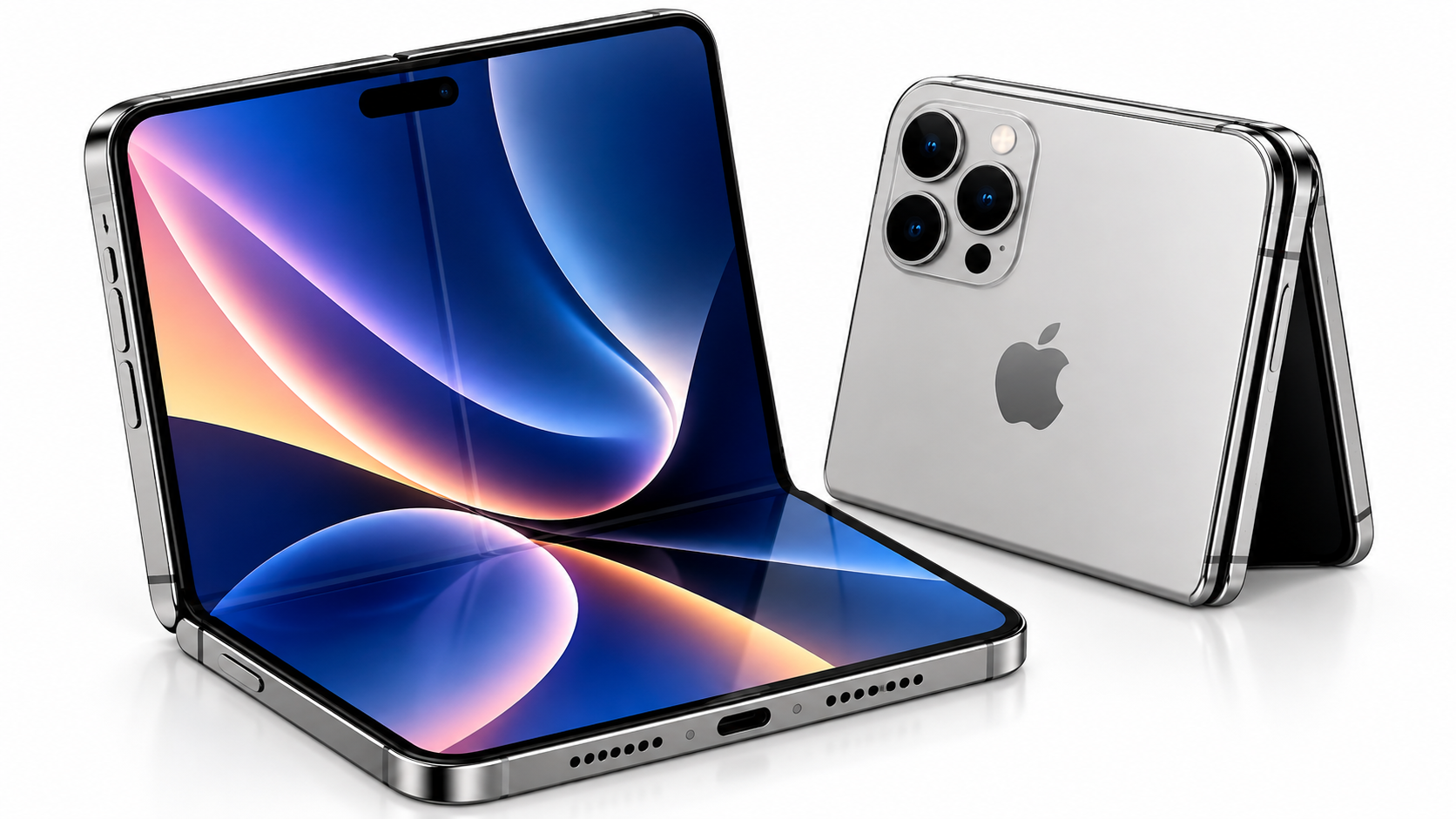
Apple has finally joined the foldable-phone race. But after years of watching Samsung, Huawei and other rivals develop the category, the iPhone Duo raises a harder question than whether Apple can build an impressive folding phone: can Apple still keep up when some of the industry’s fastest-moving ideas are being developed elsewhere first?
The iPhone Duo, unveiled September 9, is Apple’s first foldable iPhone. It opens to a 7.6-inch display, uses Apple’s A20 Pro chip and starts at $1,999 in the United States and $2,999 in Canada. Apple calls it the most transformational change to the iPhone since the original.
But transformation is exactly what Apple now has to prove.
Has Apple Gone From Leading the Smartphone Conversation to Chasing It?
Apple did not invent the smartphone, tablet or smartwatch, and arriving late has never automatically meant failure for the company. Historically, Apple has often waited, refined an existing idea and then brought it to a much larger audience.
Foldables, however, present a particularly uncomfortable comparison. Samsung has been selling folding smartphones since 2019. Huawei and Xiaomi have also pushed aggressively into the category. Reuters noted that Apple’s arrival comes after years of development by Samsung and Chinese competitors.
That makes the Duo more than a new product. It is a test of whether Apple’s old strategy — arrive later, integrate better and make the category mainstream — still works in a market where competitors are moving increasingly quickly.
$1,999 for Apple’s First Attempt
The price makes that test even tougher. The Duo begins at $1,999 in the U.S., more than 50% above the conventional iPhone 18 Pro Max starting price, according to The Washington Post’s launch coverage.
At nearly $2,000, buyers can reasonably ask: are they paying for Apple’s best foldable technology, or paying a premium to enter a category that Apple’s competitors have already spent years improving?
Samsung Isn’t Letting Apple Pretend It Got Here First
Samsung responded aggressively to Apple’s launch. Reuters reported that the company launched a publicity campaign emphasizing its earlier entry and hardware experience in foldables.
The rivalry has become unusually public because Samsung has a simple argument: it took the risks first. Apple now has to demonstrate that arriving years later produced something meaningfully better rather than simply something unmistakably Apple.
And Some Early Enthusiasts Are Choosing Samsung
A Tom’s Guide reader poll published after the launch collected 2,761 votes. In that poll, 62% selected the Galaxy Z Fold 8, while 23% chose the iPhone Duo. The poll represents Tom’s Guide readers, not the overall smartphone market, so it should not be interpreted as a sales forecast.
Still, it challenges the assumption that Apple’s brand alone guarantees enthusiasm among technology-focused consumers.
Is Apple Still Setting the Pace?
This is the larger question the Duo exposes.
Apple remains one of the world’s most powerful consumer-technology companies, with an enormous installed base and an ecosystem competitors struggle to replicate. The Duo also offers advantages that could make foldables appealing to people who would never leave iOS.
But technological leadership is not only about sales. It is also about who forces everyone else to react.
For years, competitors copied ideas popularized by the iPhone. With foldables, Apple is the company responding to a category its rivals built first.
Then There Is AI
The pressure extends beyond folding phones. Smartphone competition is increasingly being shaped by artificial intelligence, new device formats and deeper integration between phones and personal computing. Apple is therefore fighting on several fronts at once.
The question isn’t whether Apple remains powerful — it clearly does. The more interesting question is whether its enormous ecosystem gives it enough time to enter emerging categories later than competitors without eventually surrendering its reputation as the company defining what comes next.
Apple’s Biggest Advantage Could Also Be Its Biggest Risk
The iPhone ecosystem may be the Duo’s strongest weapon. Millions of users have years of photos, purchases, apps, Apple Watches, AirPods and other services tied to Apple. A foldable iPhone lets them experiment with the format without switching platforms.
But that loyalty can cut both ways. A company with hundreds of millions of committed customers can afford to move cautiously. The danger is becoming so comfortable with that advantage that competitors gain years to experiment with the next major technology.
The Question Apple Now Has to Answer
The iPhone Duo may become enormously successful. Apple’s late arrival could once again prove deliberate rather than damaging.
But this launch creates a fascinating reversal.
Samsung spent years trying to catch the iPhone. In foldables, Apple is the newcomer.
So perhaps the biggest story isn’t that Apple finally made an iPhone that folds.
It’s whether Apple can still convince the world that arriving late means arriving better — or whether, for the first time in a long time, the smartphone market is beginning to move faster than Apple does.