
Russia’s expanding air campaign is no longer only testing Ukraine’s power grid and air defences. It is increasingly striking at the industrial base that provides jobs, export income and tax revenue needed to keep the country functioning through a prolonged war.
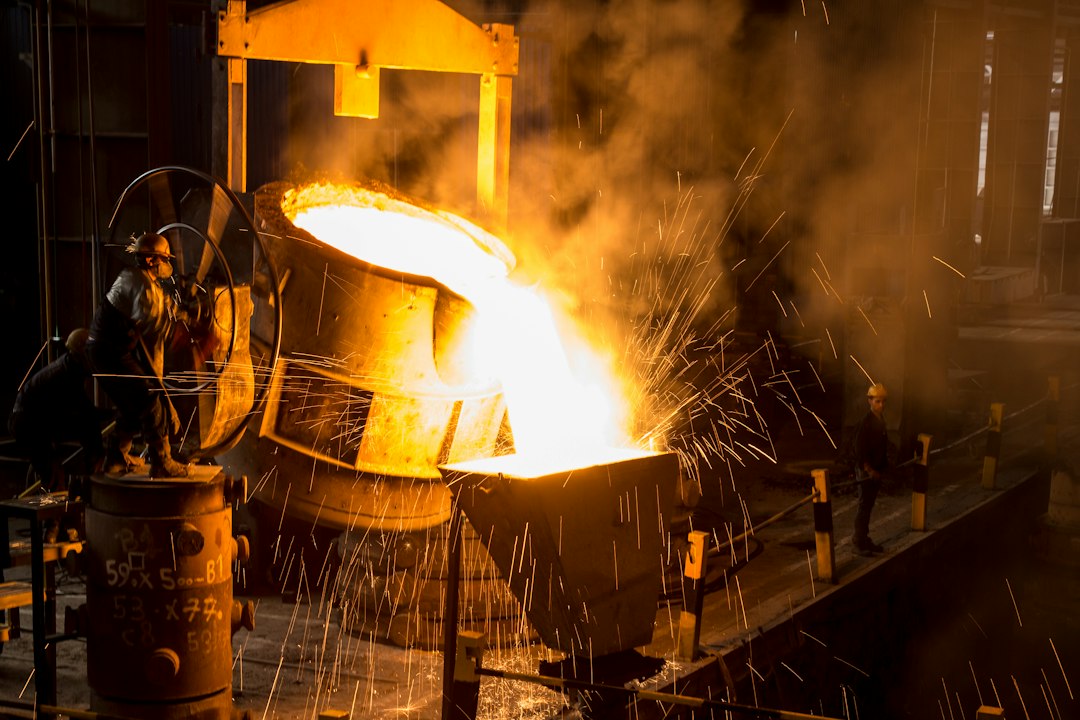
Ukraine’s largest steel plant has stopped production after repeated attacks made safe operations impossible, its owner said Friday. The shutdown at ArcelorMittal Kryvyi Rih came as fresh Russian strikes in Kyiv killed seven people, including a 14-year-old boy, and injured dozens more, according to Ukrainian officials.
The two developments reveal the double pressure facing Ukraine: civilian casualties in its cities and accumulating damage to the factories, mines, warehouses, ports and transport networks that sustain its economy. The immediate tragedy is measured in lives. The longer-term consequence may be a weaker state with fewer resources to fund defence, support displaced families and eventually rebuild.
Four strikes in five weeks
ArcelorMittal said it had informed the Ukrainian government that “safe and sustainable” operations were no longer possible at its Kryvyi Rih complex after four strikes in five weeks caused extensive damage and killed five workers. The company plans to preserve essential infrastructure so production could potentially restart when conditions allow.
The scale makes the decision nationally significant. According to Reuters reporting published September 25, the plant produced about 1.7 million metric tons of steel in 2025. Its associated mines produced 7.6 million tons of iron ore. The operation employs roughly 12,500 people and uses another 3,500 contractors.
ArcelorMittal expects to record a non-cash impairment charge of approximately $1 billion. That accounting loss matters to investors, but the economic impact inside Ukraine extends further: wages that support families, purchases from local suppliers, rail and port traffic, export earnings and taxes paid to the state.
Steel once accounted for about 15% of Ukraine’s exports, Reuters reported. The sector had already been reduced by occupation, destroyed plants, damaged ports, labour shortages and higher transport costs. Losing production at the country’s largest remaining mill deepens that decline and increases the risk that temporary wartime shutdowns become permanent industrial losses.
The attack on the economy is becoming broader
Russia has intensified strikes involving ballistic missiles and jet-powered drones against sites across Ukraine. Businesses, logistics centres, Black Sea port facilities and civilian infrastructure have all been hit. Russia’s Defence Ministry said its forces targeted defence-industry facilities, military logistics centres and vessels used by Ukraine’s armed forces.
Moscow has repeatedly denied deliberately targeting civilians. Ukrainian authorities and international monitors, however, continue to document civilian deaths and damage to homes, hospitals, shops and workplaces.
In Kyiv on Friday, a drone struck a high-rise building and killed a 14-year-old boy, Ukrainian officials said. Four more bodies were later found at a parking area after a separate strike on an office building. By Friday evening, the reported toll across the capital had risen to seven dead and 59 injured, with 25 people receiving hospital treatment.
The United Nations monitoring mission, cited by Reuters, said it had recorded at least 200 civilian deaths in Ukraine during September. That figure remains preliminary and may change as cases are verified.
The campaign also reaches beyond obvious military production. President Volodymyr Zelenskyy said a food warehouse used by McDonald’s was among the sites hit Friday. Earlier in the week, he visited a Kyiv maternity hospital damaged in a ballistic-missile attack, according to the Ukrainian presidency.
Why one steel plant matters to the wider war
Industrial capacity is a strategic asset in a long conflict. Steel supports construction, railways, repairs and manufacturing. Iron ore and finished metal generate hard-currency earnings. Large plants anchor entire local economies, making their shutdowns difficult to absorb even when the physical structures survive.
There is also a compounding effect. When production stops, Ukraine loses output and tax revenue while spending more on air defence, emergency repairs, compensation and social support. Workers with specialized skills may relocate or change industries. Suppliers lose contracts. Equipment deteriorates. Restarting becomes slower and more expensive with every month a plant remains idle.
This is why the shutdown is more than a corporate story. Russia does not need to destroy every furnace or mine to impose a major cost. Repeated attacks can make insurance, staffing, power supply and routine operations too dangerous or unreliable to continue. The economic damage then persists even between strikes.
Escalation is running in both directions
Ukraine has increased its own long-range attacks on Russian oil refineries, defence plants and logistics facilities, arguing that those sites help finance or supply Moscow’s invasion. A Ukrainian drone strike forced operations to stop at the Novoshakhtinsk refinery in Russia’s Rostov region, while Kyiv said it also struck facilities in Perm and Ulyanovsk.
Russian President Vladimir Putin said Ukrainian forces had escalated attacks and should face retaliatory strikes. He also said proposals for ceasefire talks remained available but that Moscow would weigh its interests before responding. Those comments leave diplomacy formally open while the military and economic pressure continues to increase.
The legal and factual circumstances of individual strikes can differ, and independent access to damaged sites is often limited during wartime. Claims by either government should therefore be treated as claims unless independently verified. What is clear is that the expanding exchange of long-range attacks is placing workers and civilians farther from the front line at growing risk.
A slower crisis after the headlines move on
Ukraine can seek new financing, reroute trade and repair damaged facilities. It cannot easily replace a large integrated steel complex, thousands of skilled workers or the network of businesses built around them.
For international supporters, the shutdown raises a practical question: military aid may help Ukraine defend territory, but can economic and air-defence support prevent the country’s industrial base from being gradually hollowed out? The answer will influence not only the course of the war, but also the cost and feasibility of reconstruction whenever fighting ends.
For now, ArcelorMittal says it will preserve the Kryvyi Rih site and discuss its future with the Ukrainian government. That keeps open the possibility of restarting. But each new strike makes the line between a temporary closure and a permanent loss harder to hold.
Sources: Reuters; Reuters on Putin’s comments; Office of the President of Ukraine; Associated Press Ukraine coverage.